📚 Certification Level 1 of 3

Futures Trading Foundations

Master the fundamentals of futures trading and build your foundation for success

📖7 Modules
⏱️~4 Hours
15 Question Exam
📍 Module 01

The Vehicle (What Futures Actually Are)

By the end of this module, you will clearly understand what a futures contract is, why it exists, and why it is the preferred instrument for professional traders and prop firms.

🔹 1. The Time Travel Concept

Most people understand stocks. You exchange money and receive ownership in a company. Your profit or loss is tied to how that company performs over time.

Futures do not work that way.
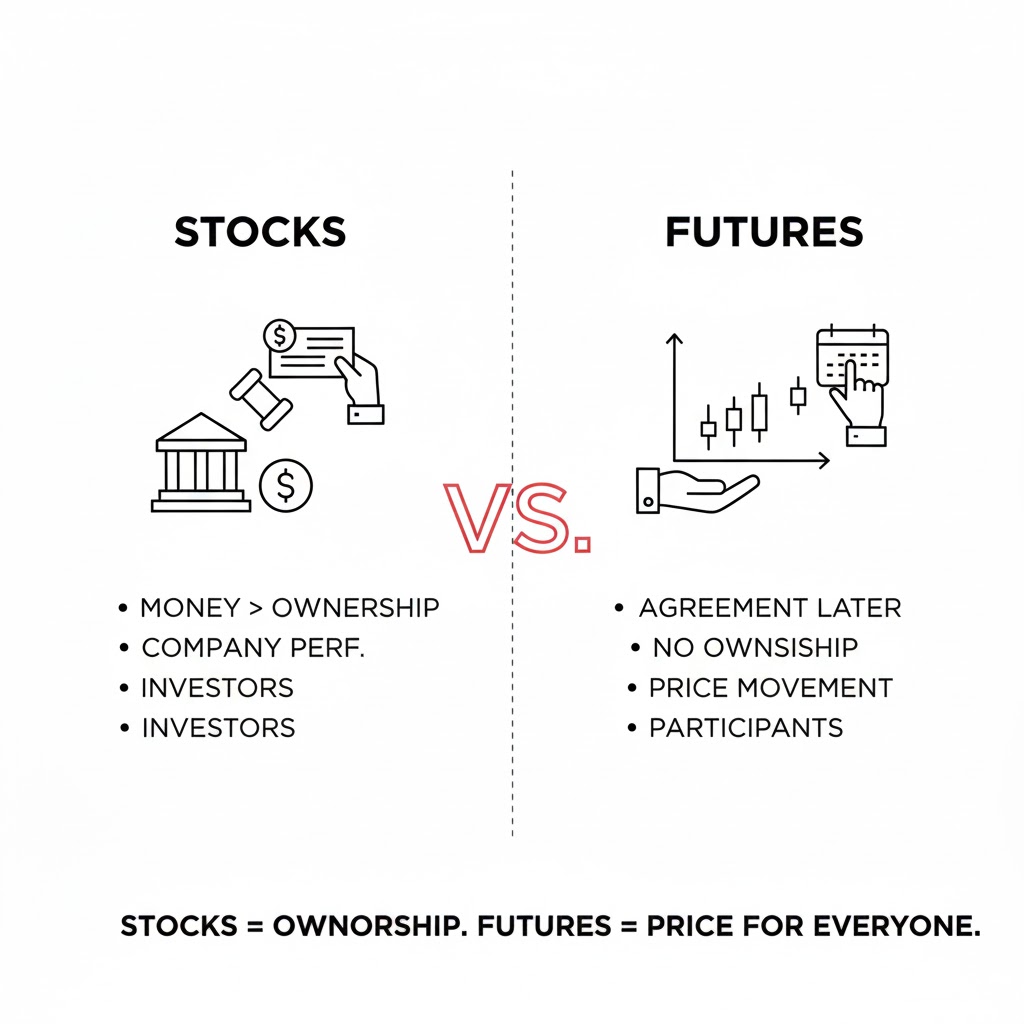
Stocks vs Futures comparison

A futures contract is a standardized agreement to transact at a later date, based on what the market believes something will be worth in the future. You are not buying ownership. You are participating in price movement.

This is why futures feel unfamiliar at first. They are not built for investors. They are built for participants.

🔹 2. Why Futures Were Created

Futures were born from uncertainty.

In the 1700s, Japanese rice farmers faced unpredictable pricing. A strong harvest could collapse prices by the time crops reached the market. To protect themselves, farmers and buyers agreed on prices ahead of time.

Historical origin of futures - Japanese rice farmers

Those agreements created stability. Over time, they became standardized contracts traded openly.

💡
Key Insight: The goal was not speculation. The goal was certainty.

🔹 3. Futures in the Modern World

Today, futures trade global markets. Equity indices, commodities, interest rates, and currencies.

When you trade the S and P 500 through the ES contract, you are not buying shares of companies. You are trading expectations. You are participating in how the market values the index at a future point in time.

This distinction matters because it changes how you think.

🔹 4. Why Futures Are Used by Professionals

Futures markets are centralized, regulated, liquid, and transparent. Every participant sees the same price. There is no dark pool advantage.

This structure is why institutions and prop firms operate here. It creates fairness, consistency, and scalability.
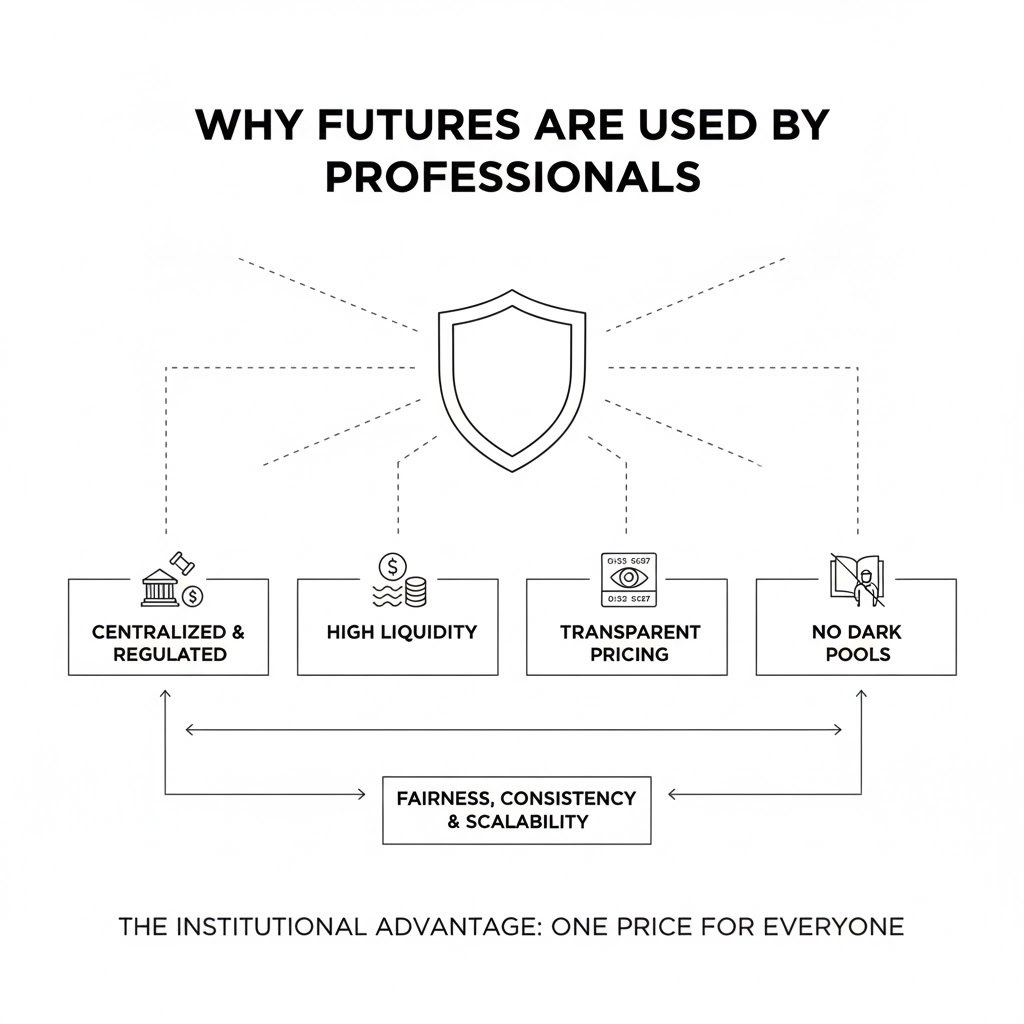
Why professionals use futures

🎯 Checkpoint: Before You Move On

You should understand what a futures contract represents and why it exists.

✅ Module Knowledge Check

What best describes a futures contract?

📝 Module Summary

  • Futures trade future value
  • They were created to reduce uncertainty
  • They are designed for participation, not ownership
  • Professional markets prefer standardized contracts
📍 Module 02

Leverage and Margin (The Multiplier)

Understand how leverage works in futures markets and why margin exists.

🔹 1. What Leverage Really Means

Leverage allows you to control a large notional value with a relatively small amount of capital.

This does not mean increased risk by default. It means increased sensitivity. Small price movements matter more.

Leverage exposes behavior. It rewards discipline and punishes emotion.

🔹 2. Margin Explained Correctly

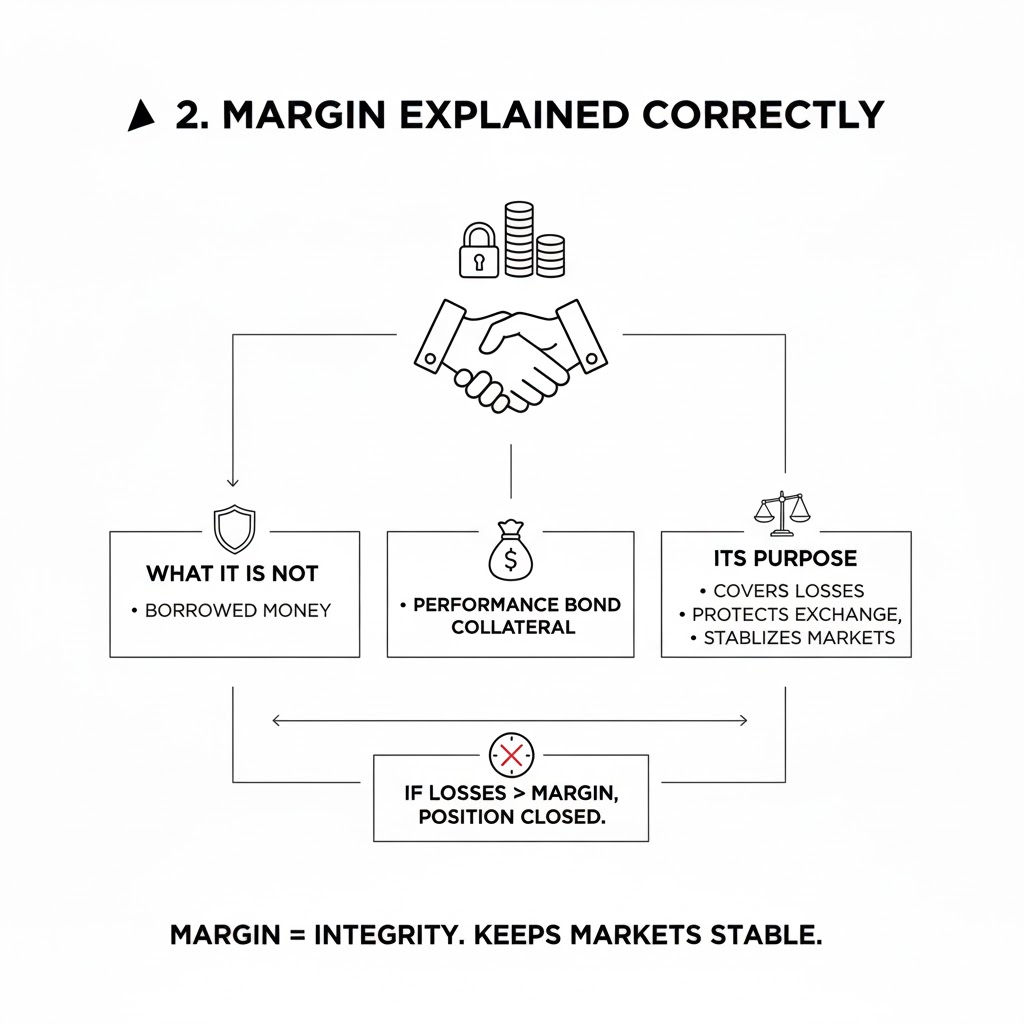
Margin in futures is not borrowed money. It is a performance bond.

It exists to ensure that you can cover losses if price moves against you. When losses exceed margin, positions are closed.

Margin explained

This system protects the exchange and keeps markets stable.

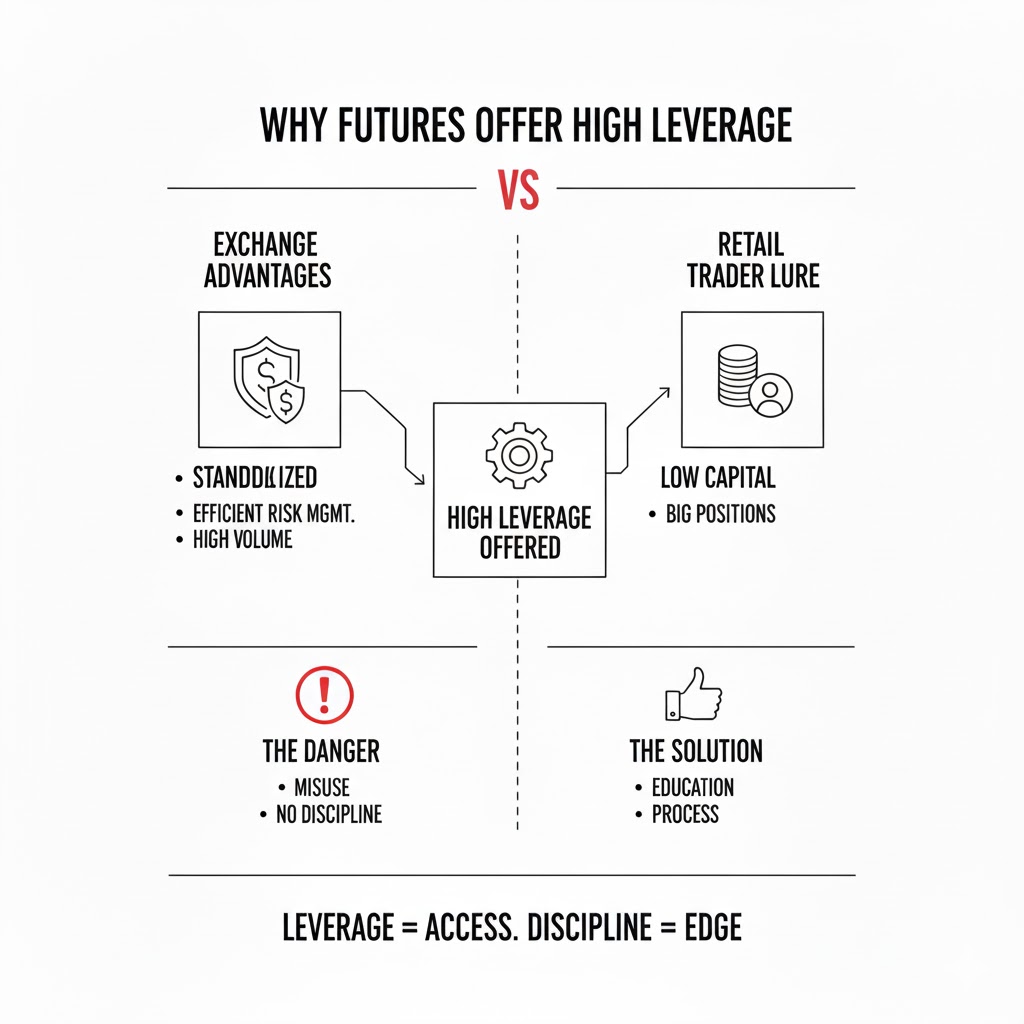
🔹 3. Why Futures Offer High Leverage

Futures are standardized and liquid. This allows exchanges to manage risk efficiently.

Retail traders are attracted to leverage because it lowers the capital barrier. The danger is not leverage itself. The danger is misuse.

Why futures offer high leverage

🎯 Checkpoint: Before You Move On

You should understand that margin is protection, not buying power.

✅ Module Knowledge Check

What is margin in futures trading?

📝 Module Summary

  • Leverage magnifies behavior
  • Margin is collateral
  • Discipline determines outcome
📍 Module 03

Long, Short, and Market Neutrality

Understand directional flexibility and why futures traders remain neutral.

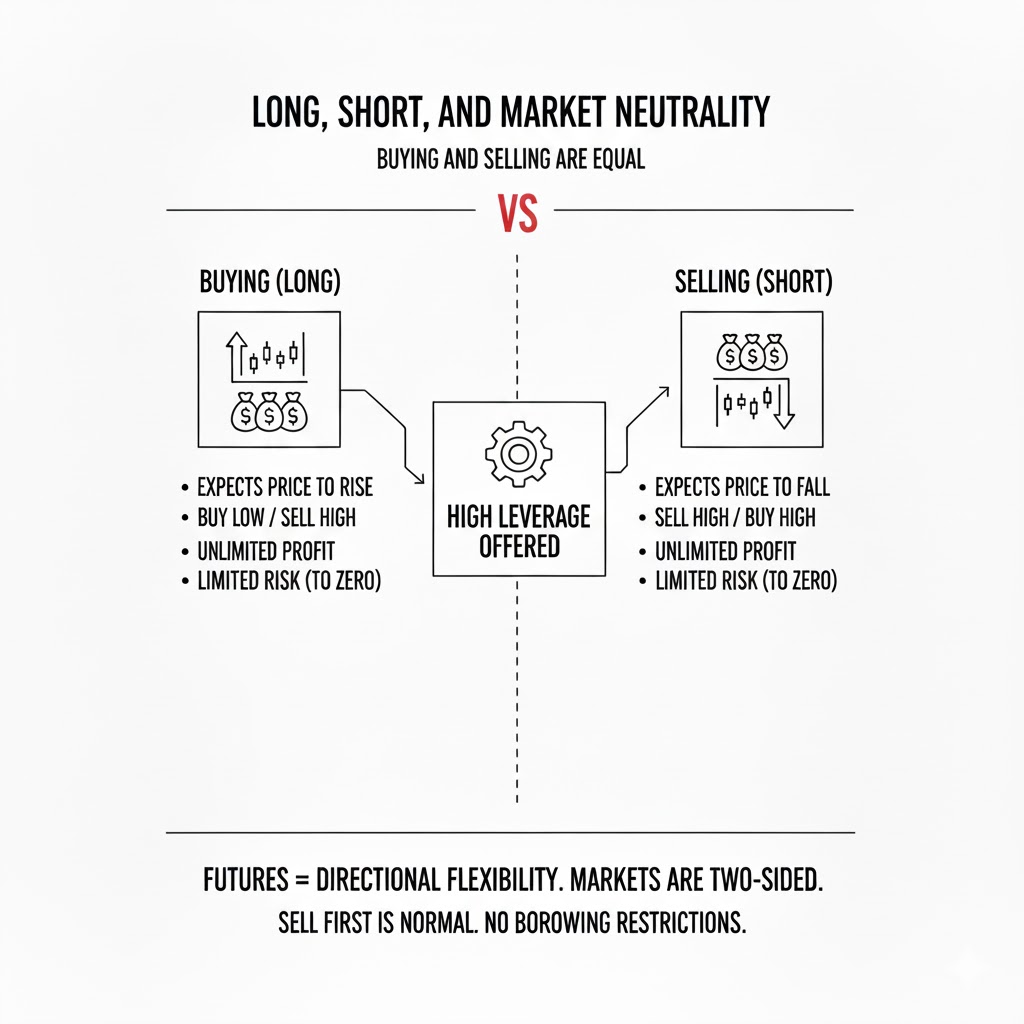
🔹 1. Buying and Selling Are Equal

In futures, selling first is normal. There is no borrowing process or special permission.

This allows traders to participate in falling markets as easily as rising ones.

Buying and selling are equal

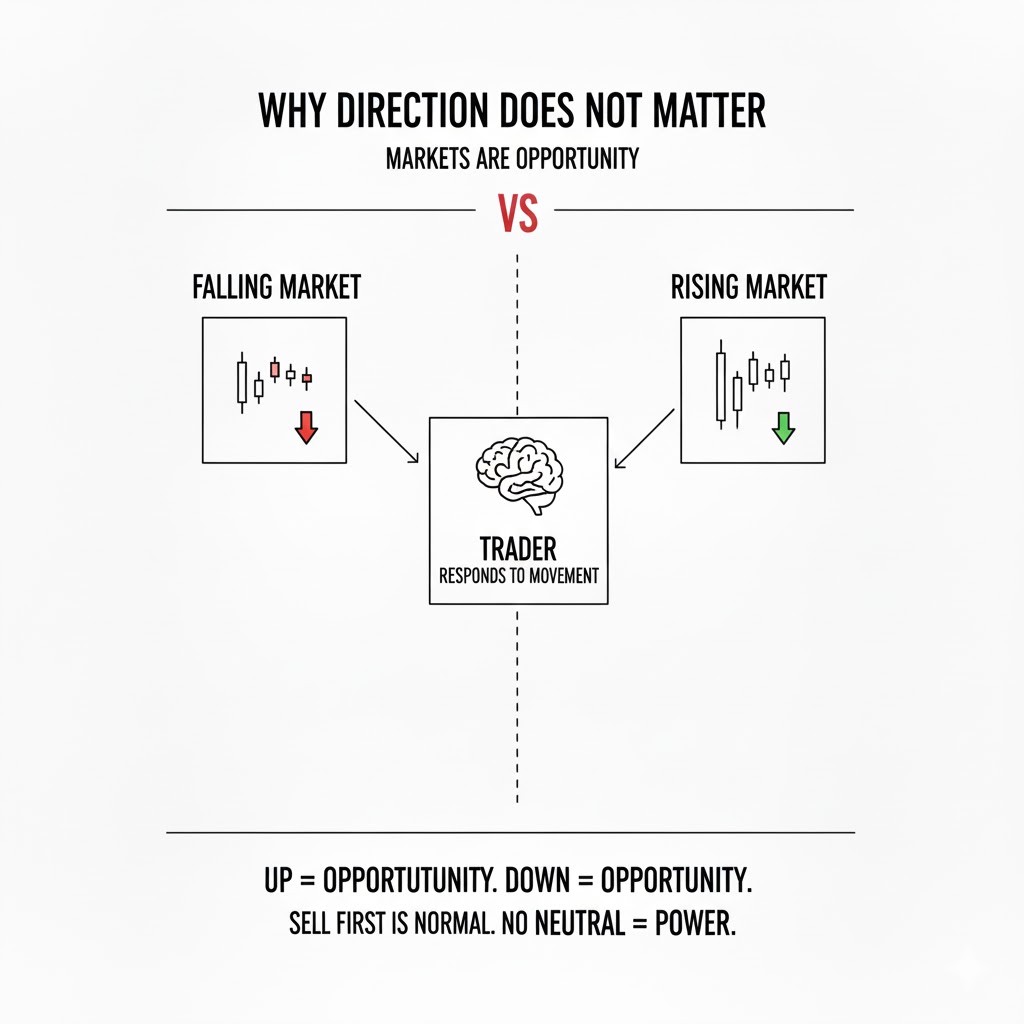
🔹 2. Why Direction Does Not Matter

Markets move based on information, emotion, and liquidity. Traders do not need to predict outcomes.

They respond to movement.

A falling market is not bad. A rising market is not good. Both are opportunity.

Why direction does not matter

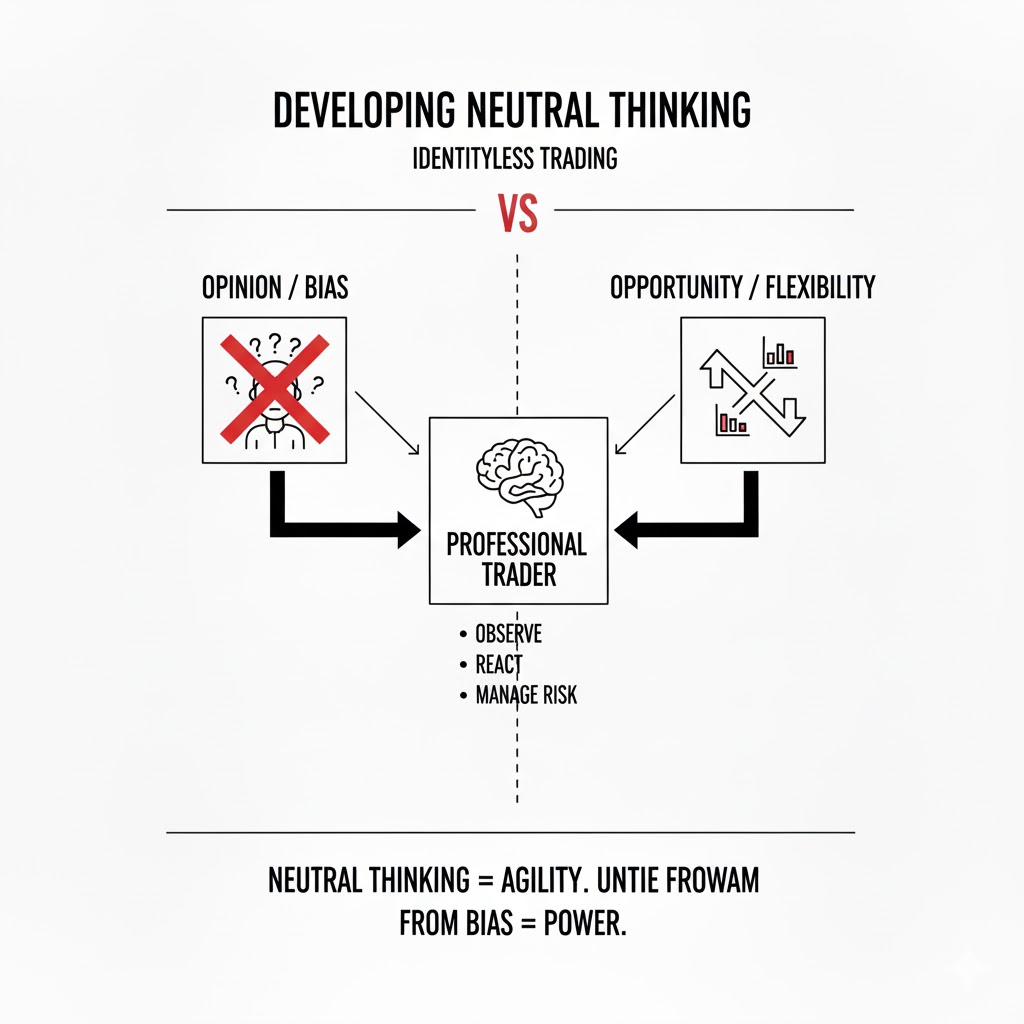
🔹 3. Developing Neutral Thinking

Professional traders remove identity from direction. They do not marry opinions.

They observe, react, and manage risk.

Developing neutral thinking

🎯 Checkpoint: Before You Move On

You should feel comfortable with both buying and selling.

✅ Module Knowledge Check

What does it mean to go short?

📝 Module Summary

  • Direction is neutral
  • Bias limits opportunity
  • Flexibility is professional
📍 Module 04

Symbols, Contracts, and Time

Learn how futures contracts are labeled and how time affects markets.

🔹 1. Understanding Symbols

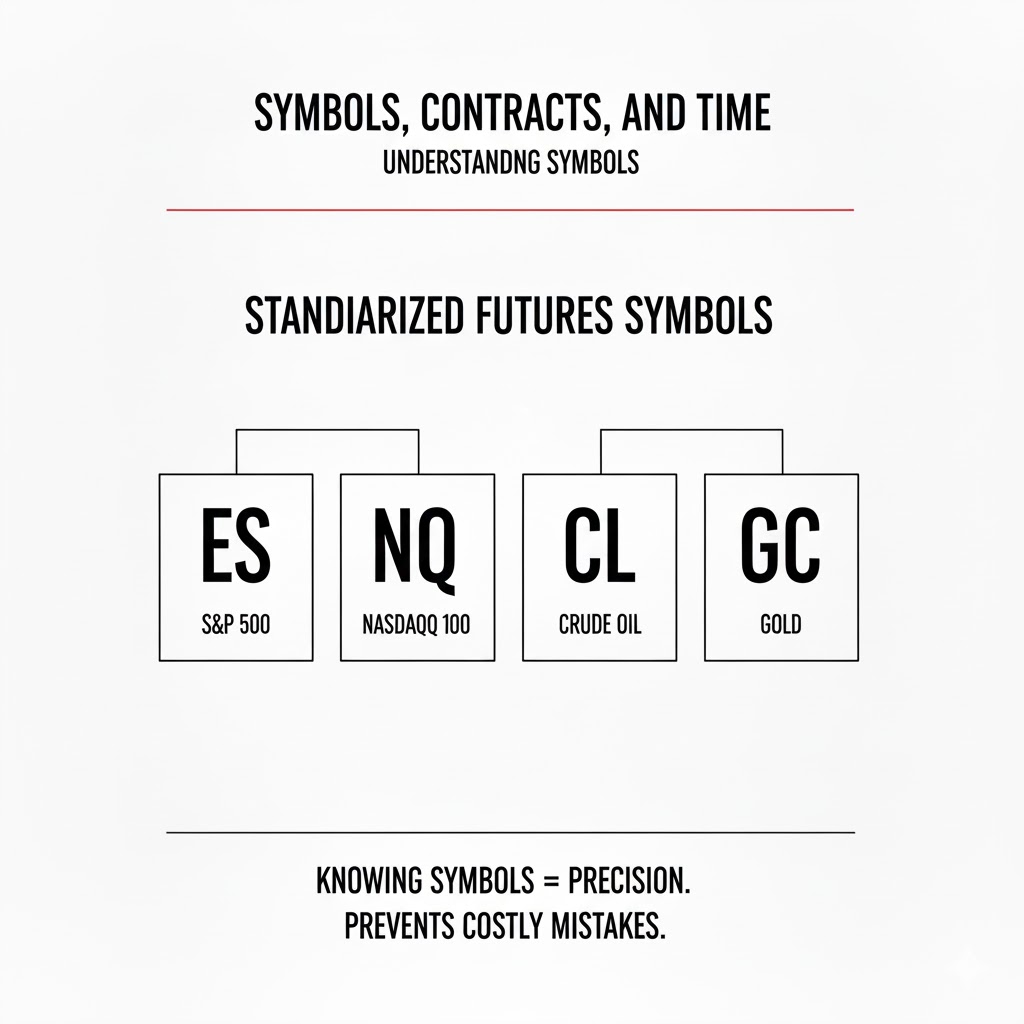
Each futures market has a standardized symbol representing the underlying asset.

ES tracks the S and P 500
NQ tracks the Nasdaq 100
CL tracks Crude Oil
GC tracks Gold

Knowing symbols prevents costly mistakes.

Understanding futures symbols

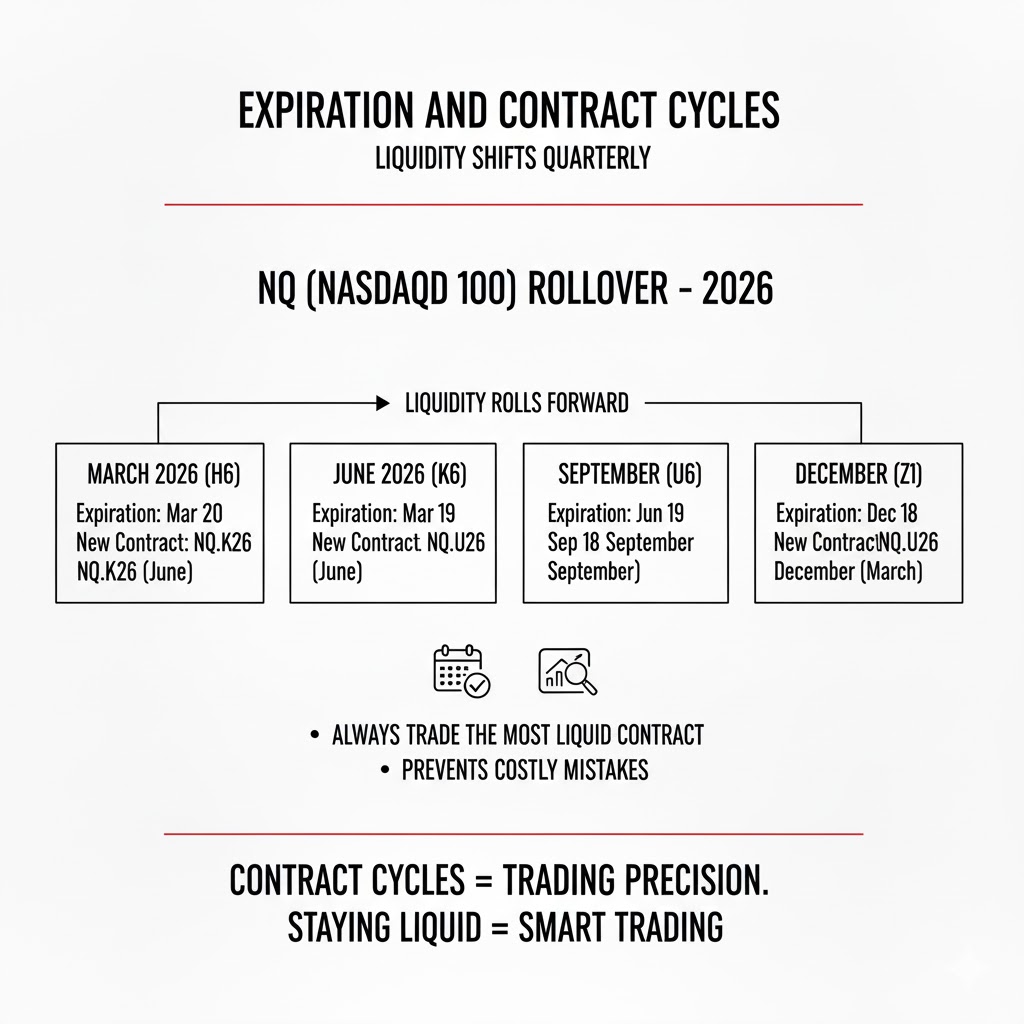
🔹 2. Expiration and Contract Cycles

Futures contracts expire quarterly. Liquidity shifts from one contract to the next.

Traders must always trade the most liquid contract.

Expiration and contract cycles

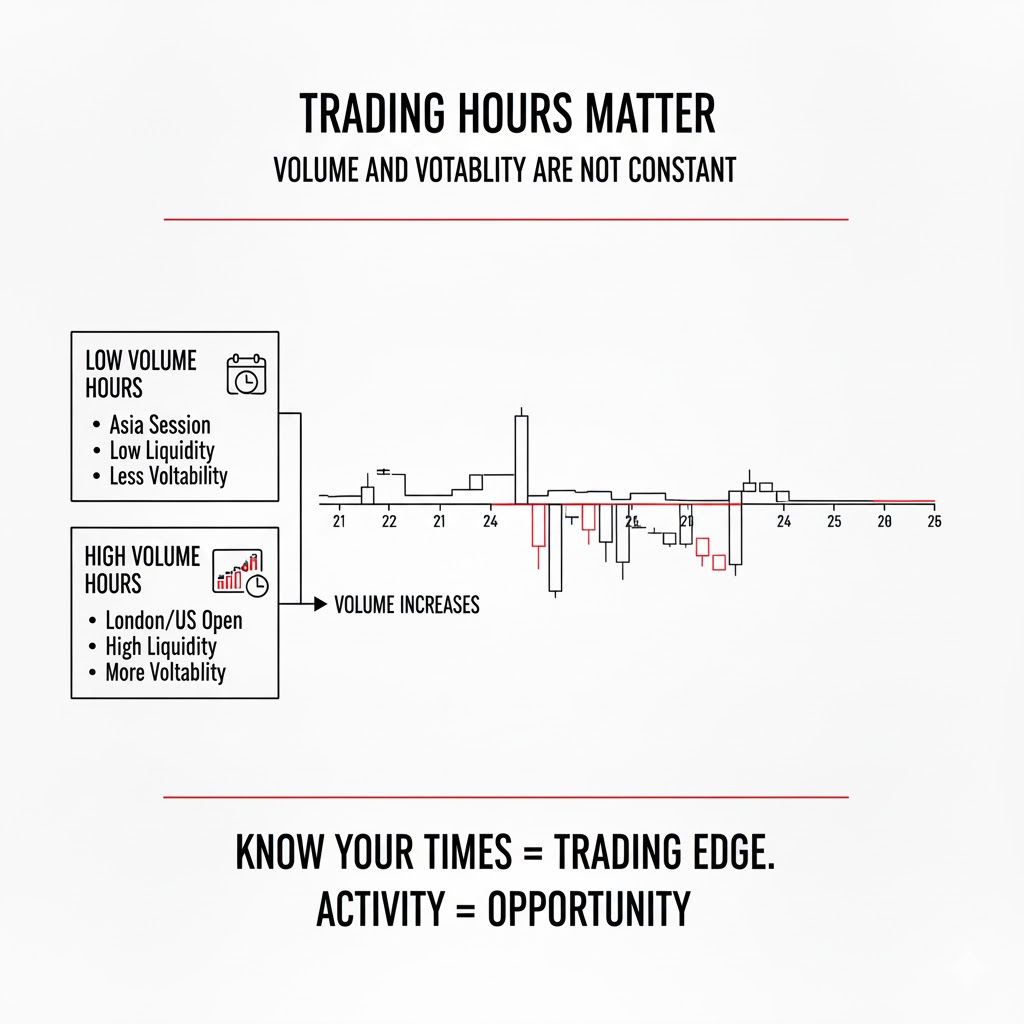
🔹 3. Trading Hours Matter

Futures markets trade nearly 23 hours a day, but not all hours are equal.

Volume changes throughout the day. Volatility follows volume.

Trading hours matter

🎯 Checkpoint: Before You Move On

You should know what you are trading and when activity occurs.

✅ Module Knowledge Check

What does ESZ25 represent?

📝 Module Summary

  • Symbols define markets
  • Contracts expire
  • Time affects volatility
📍 Module 05

Platforms, Data, and Orders

Understand the infrastructure behind futures trading.

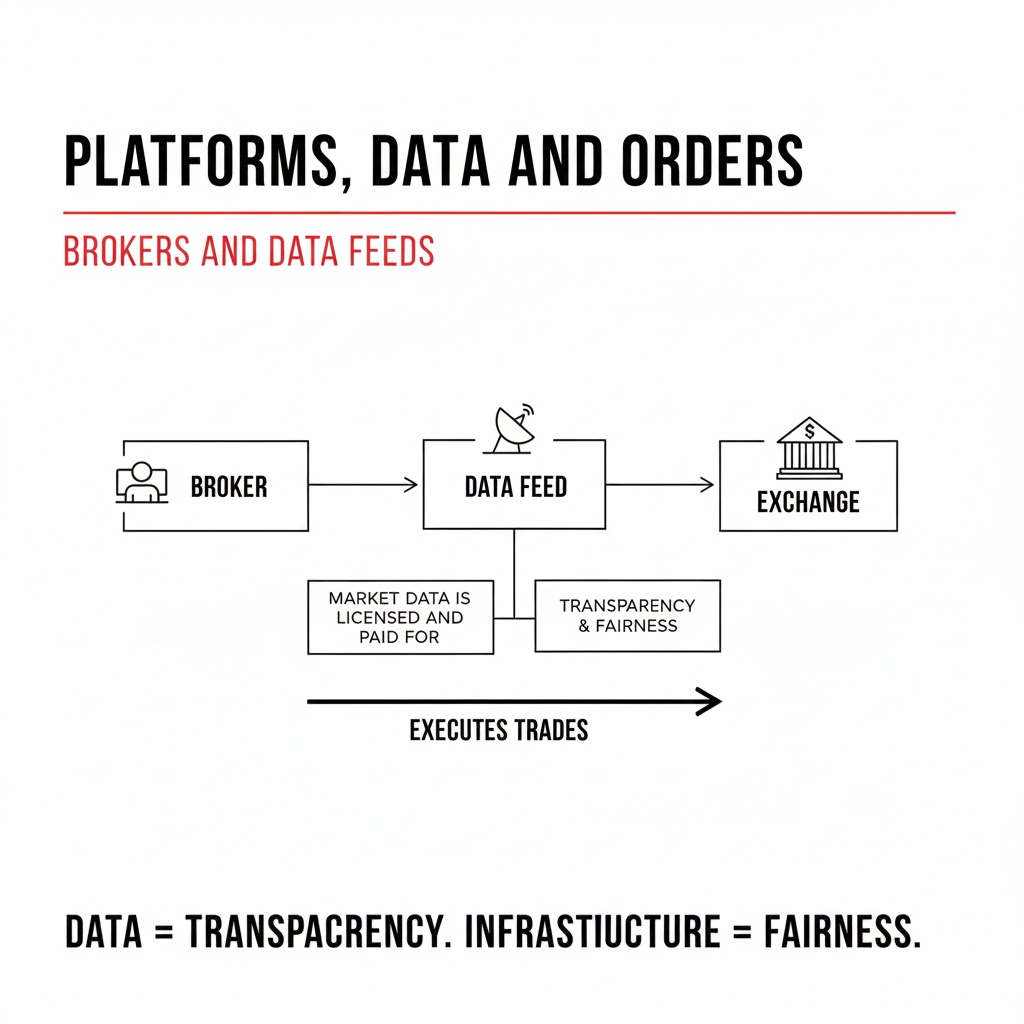
🔹 1. Brokers and Data Feeds

Your broker executes trades. Your data feed connects you to the exchange.

Market data is licensed and paid for. This ensures transparency and fairness.

Brokers and data feeds

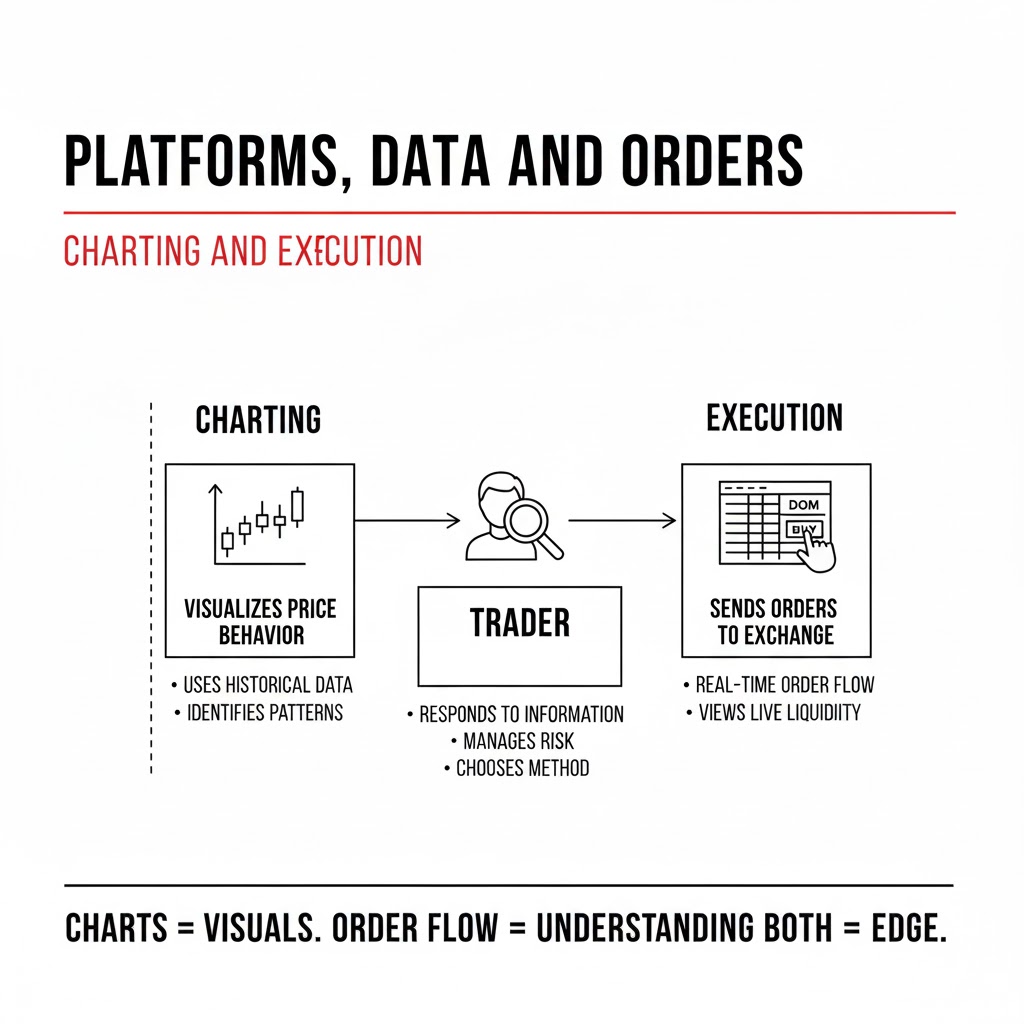
🔹 2. Charting and Execution

Charts visualize price behavior. Execution platforms send orders to the exchange.

Some traders use charts. Others use order flow. Both require understanding.

Charting and execution

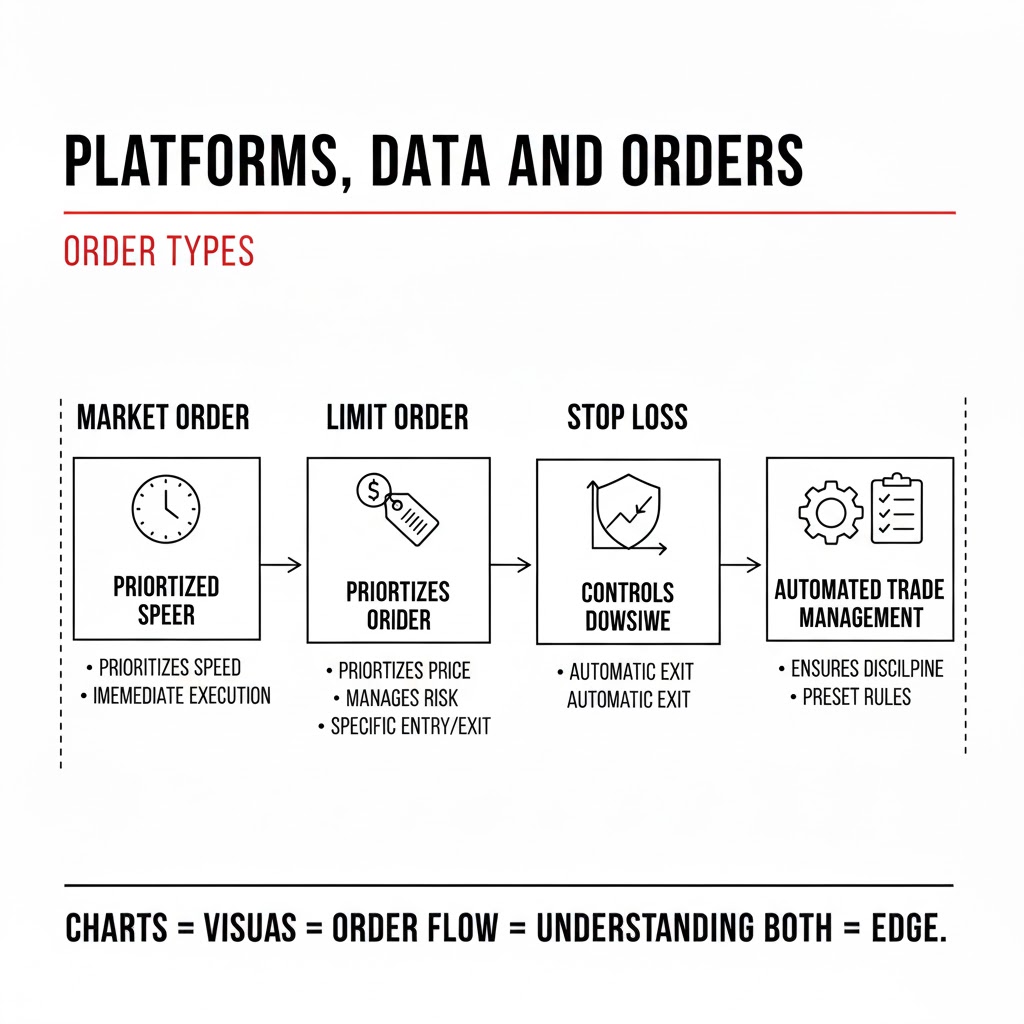
🔹 3. Order Types

Market orders prioritize speed.
Limit orders prioritize price.
Stop losses control downside risk.

Automated trade management ensures discipline.

Order types

🎯 Checkpoint: Before You Move On

You should understand how trades are entered and managed.

✅ Module Knowledge Check

Which order guarantees entry but not price?

📝 Module Summary

  • Infrastructure matters
  • Orders define outcomes
  • Automation enforces discipline
📍 Module 06

Reading Price and Market Behavior

Understand how price communicates information.

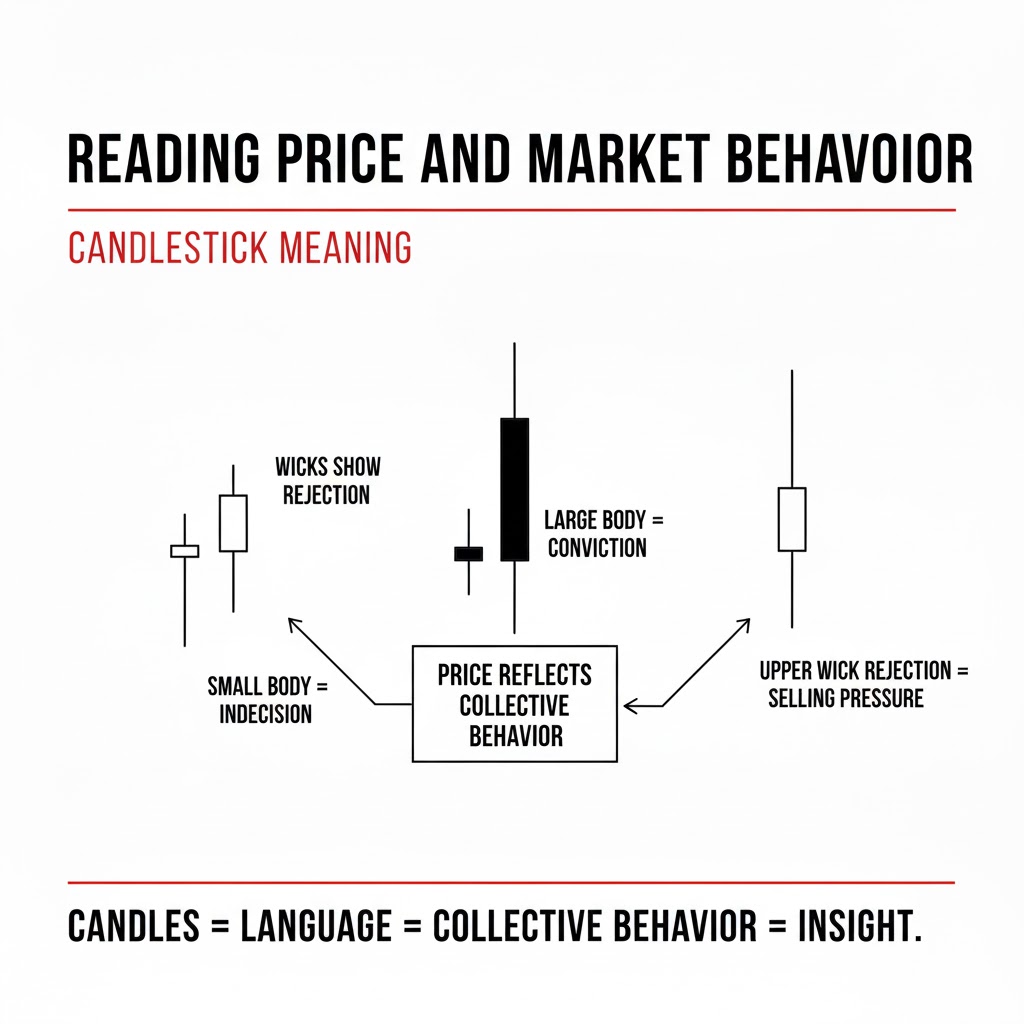
🔹 1. Candlestick Meaning

Wicks show rejection.
Bodies show conviction.

Price reflects collective behavior.

Candlestick meaning

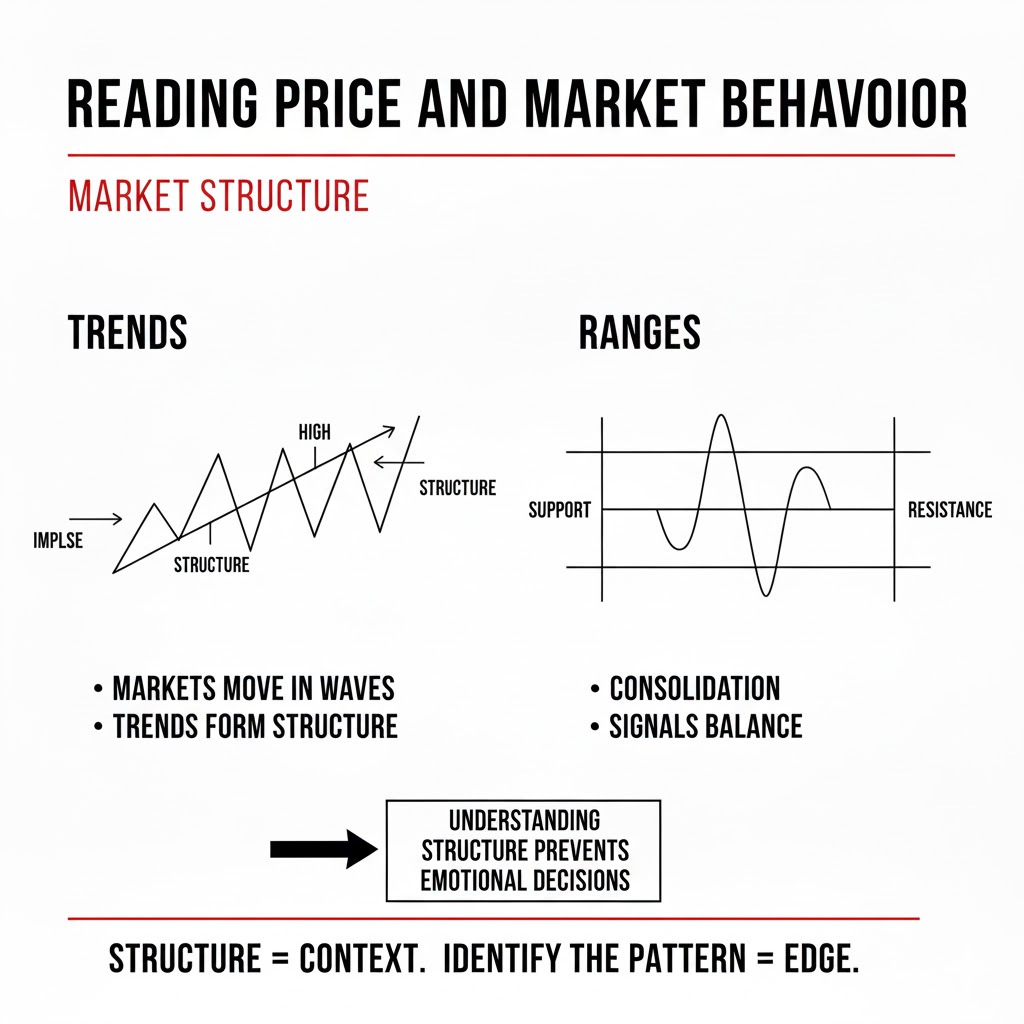
🔹 2. Market Structure

Markets move in waves. Trends form structure. Ranges signal balance.

Understanding structure prevents emotional decisions.

Market structure

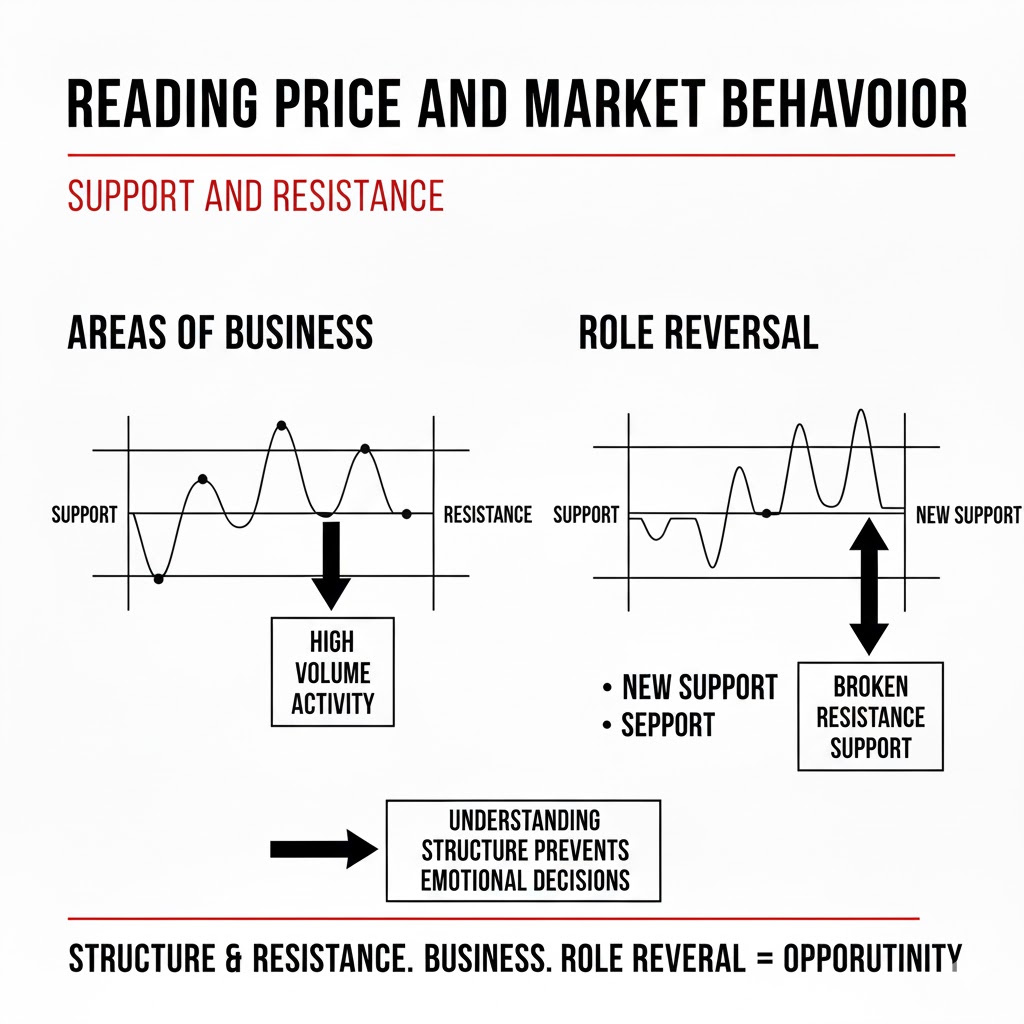
🔹 3. Support and Resistance

These are areas where business happens.

When broken, roles often reverse.

Support and resistance

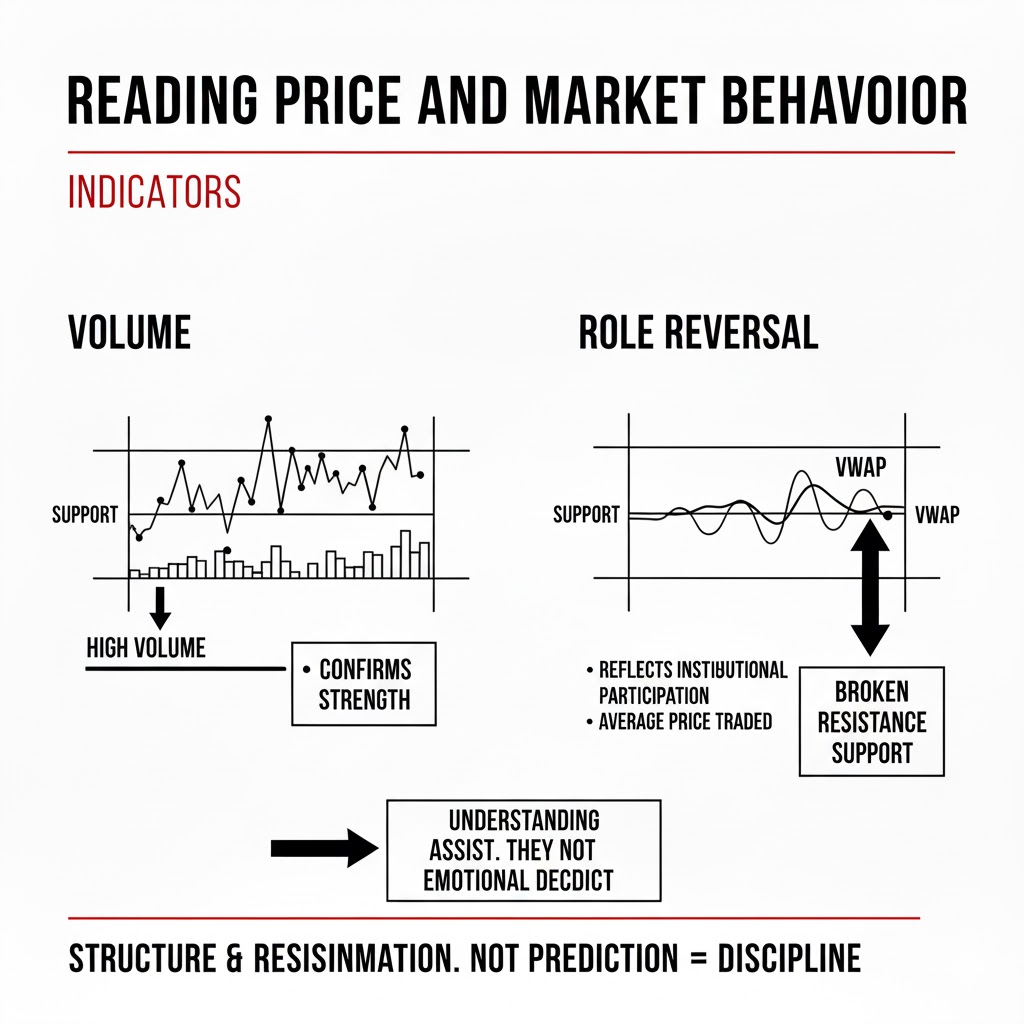
🔹 4. Indicators

Volume validates moves.
VWAP reflects institutional participation.

Indicators assist. They do not predict.

Indicators

🎯 Checkpoint: Before You Move On

You should understand how price reflects behavior.

✅ Module Knowledge Check

What does a long lower wick indicate?

📝 Module Summary

  • Price tells a story
  • Structure matters
  • Indicators confirm
📍 Module 07

Risk, Psychology, and Survival

Understand why traders fail before strategy matters.

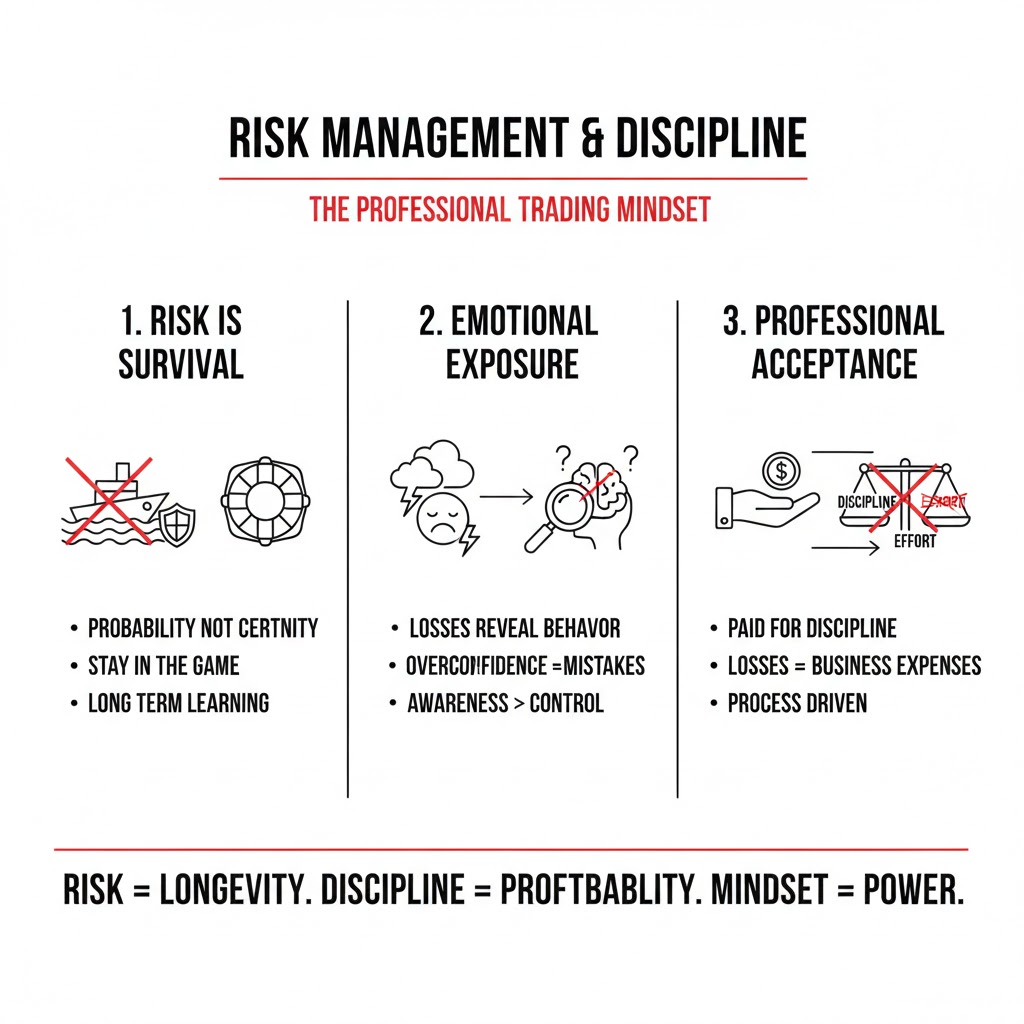
Risk management and discipline

🔹 1. Risk Is Survival

Trading is probability, not certainty.

Risk management keeps you in the game long enough to learn.

🔹 2. Emotional Exposure

Losses reveal behavior. Overconfidence amplifies mistakes.

Awareness precedes control.

🔹 3. Professional Acceptance

You are not paid for effort. You are paid for discipline.

Losses are business expenses.

🎯 Checkpoint: Before You Move On

You should understand why psychology matters before execution.

✅ Module Knowledge Check

Why do most traders fail?

📝 Module Summary

  • Risk enables longevity
  • Psychology exposes behavior
  • Discipline determines survival
🎓 FINAL EXAM

Course 1: Futures Foundations Certification Exam

Answer all 15 questions to earn your Level 1 Certification. You need 12/15 (80%) to pass.

1. Is buying a Future the same thing as buying a Stock?

2. In our "House" analogy, what is "Margin"?

3. If you think the market is going to CRASH, which button do you press?

4. Which contract is safer for a beginner to trade?

5. What is the nickname (Symbol) for the S&P 500?

6. What is a "Stop Loss"?

7. If you see a GREEN candle, who won?

8. What does "Leverage" let you do?

9. Who provides the big money when you trade for a Prop Firm?

10. If a candle has a long "Wick" (tail) at the bottom, what does it mean?

11. How often do Futures contracts expire?

12. What does "FOMO" mean?

13. True or False: "Shorting" the market means you are in debt.

14. What do we call the "Floor" on a chart where price keeps bouncing?

15. If you lose money on a trade, whose fault is it?