Certification Level 3 of 3

Futures Trading: Prop Firm Playbook

Understanding the World of Funded Accounts

Introduction

Welcome to Level 3

Understanding the World of Funded Accounts
Prop Firm Playbook Introduction

In Level 1, you learned what futures are.

In Level 2, you learned how to read the market and manage risk.

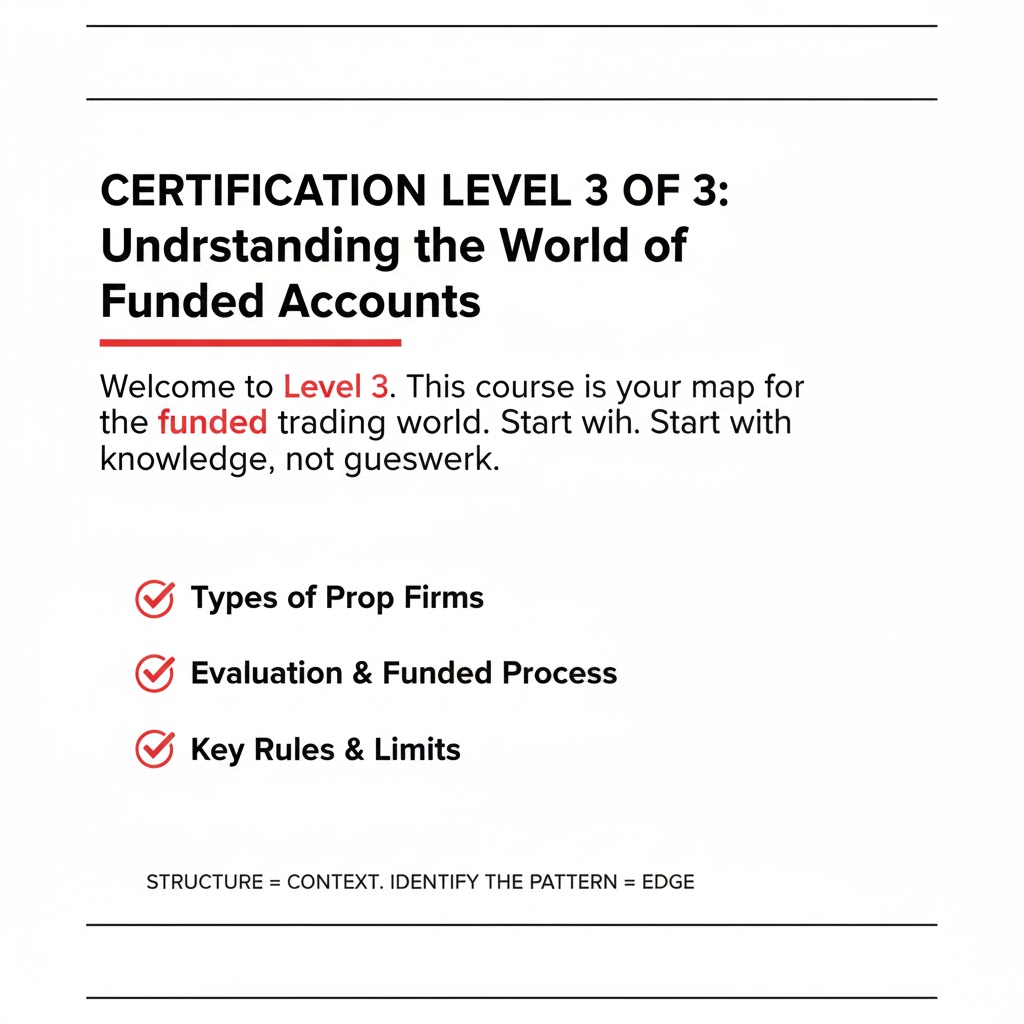
Level 3 is about the structure of prop firms—the companies that offer "funded accounts" so traders can trade with someone else's capital. This course does not teach trading strategies, does not rely on proprietary methods, and focuses purely on how prop firms operate, what their rules are, and how to navigate them safely.

By the end of this course, you will understand:

  • The types of prop firms and how they differ.
  • The evaluation and funded account process.
  • Key rules, limits, and expectations of funded trading.
  • How to avoid common beginner mistakes in prop firm accounts.

This is your map for the funded trading world, so you start with knowledge, not guesswork.
Module 01

What is a Prop Firm? (The Gateway)

Understand the purpose and structure of a prop firm.

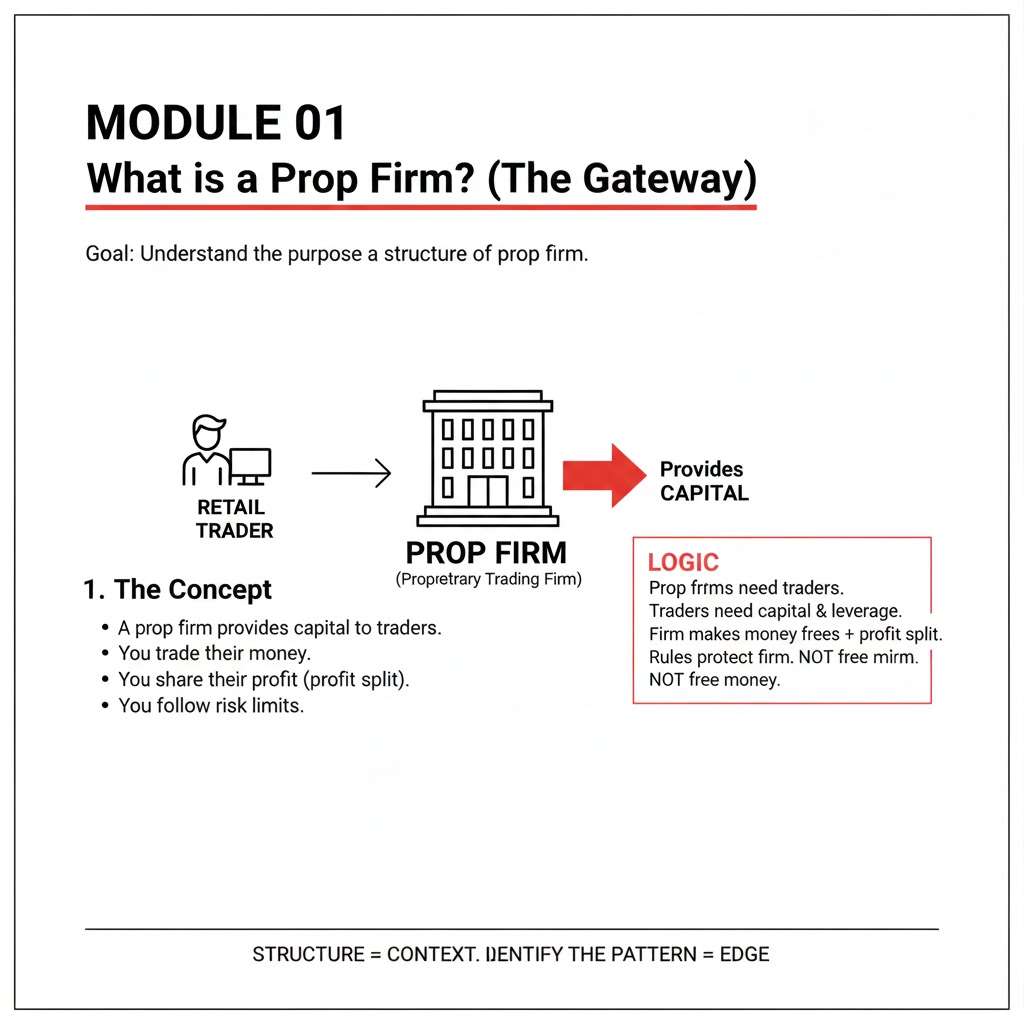
1. The Concept

A prop firm is a company that provides capital to traders so they can trade futures (and sometimes other markets) without risking their own money.

Prop firm concept diagram
  • You trade their money.
  • You share the profit (profit split) according to the firm's rules.
  • You are responsible for following risk limits; breaking them can end your account.

Logic: Prop firms exist because retail traders need leverage and capital, and the firm makes money from evaluation fees and trading agreements. Understanding this clears misconceptions—the firm is not giving free money, they have rules to protect themselves.

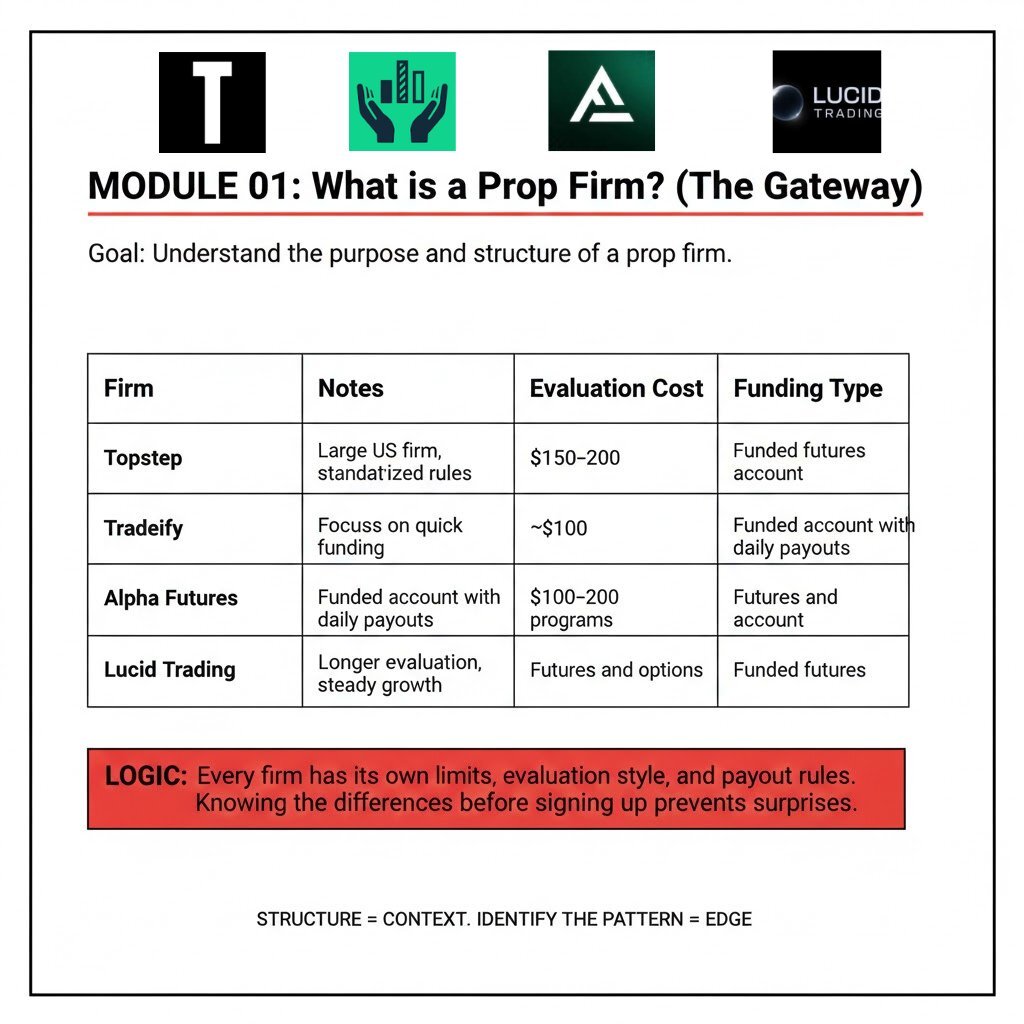
2. Examples of Popular Firms

Popular prop firms comparison
  • Topstep: Large US firm, standardized rules. Evaluation Cost: $150-$200. Funded futures account.
  • Tradeify: Focuses on quick funding. Evaluation Cost: ~$100. Funded account with daily payouts.
  • Alpha Futures: Flexible programs. Evaluation Cost: $100-$200. Futures and options.
  • Lucid Trading: Longer evaluation, steady growth. Evaluation Cost: ~$150. Funded futures account.

Logic: Every firm has its own limits, evaluation style, and payout rules. Knowing the differences before signing up prevents surprises.

Module 02

Evaluation Phase (The Trial)

Learn how evaluations work and what is expected of a trader.

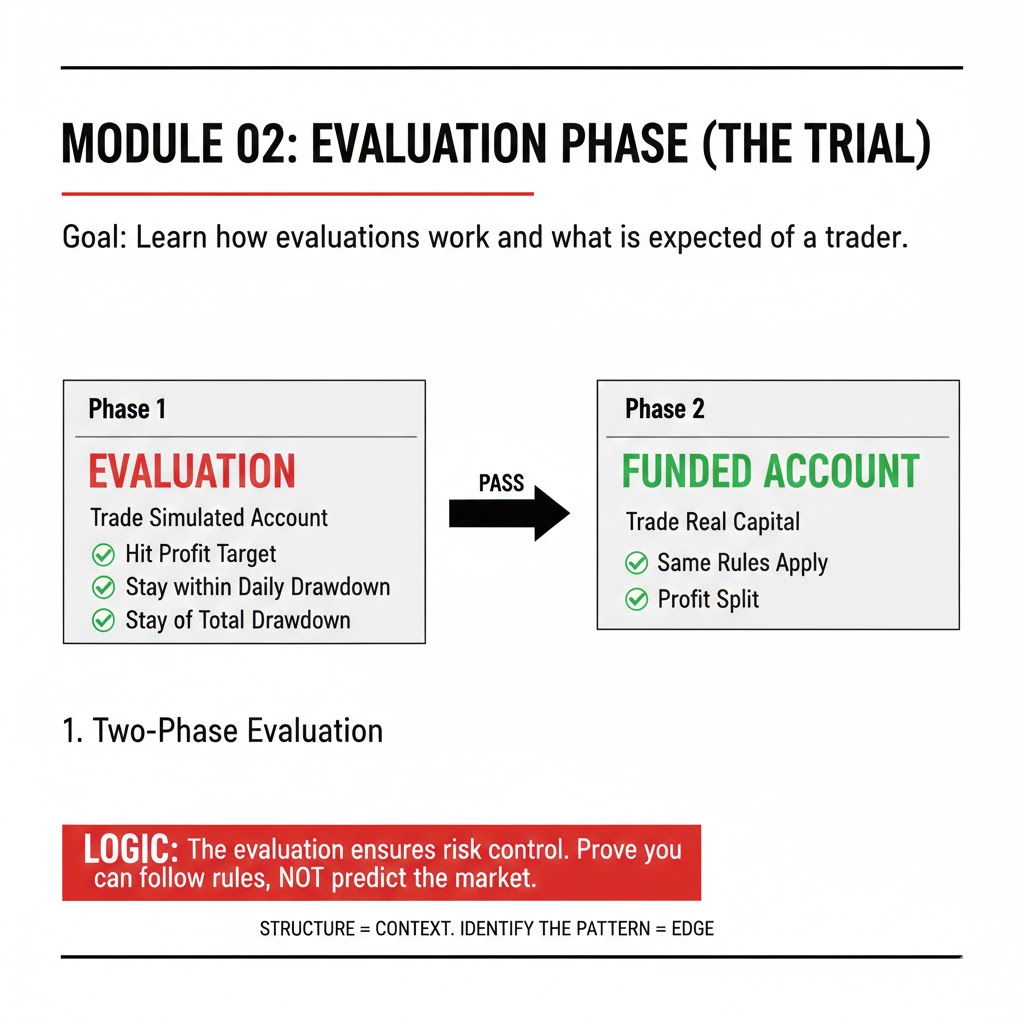
1. Two-Phase Evaluation

Most prop firms use a two-step system:

Two-phase evaluation process

Evaluation

  • You trade a simulated account to show discipline.
  • You must hit a profit target without exceeding daily or total drawdown limits.

Funded Account

  • Once you pass, you trade a real funded account under the same rules.
  • Profit is split according to the firm's agreement.

Logic: The evaluation exists to ensure risk control. You are proving you can follow rules, not predicting the market.

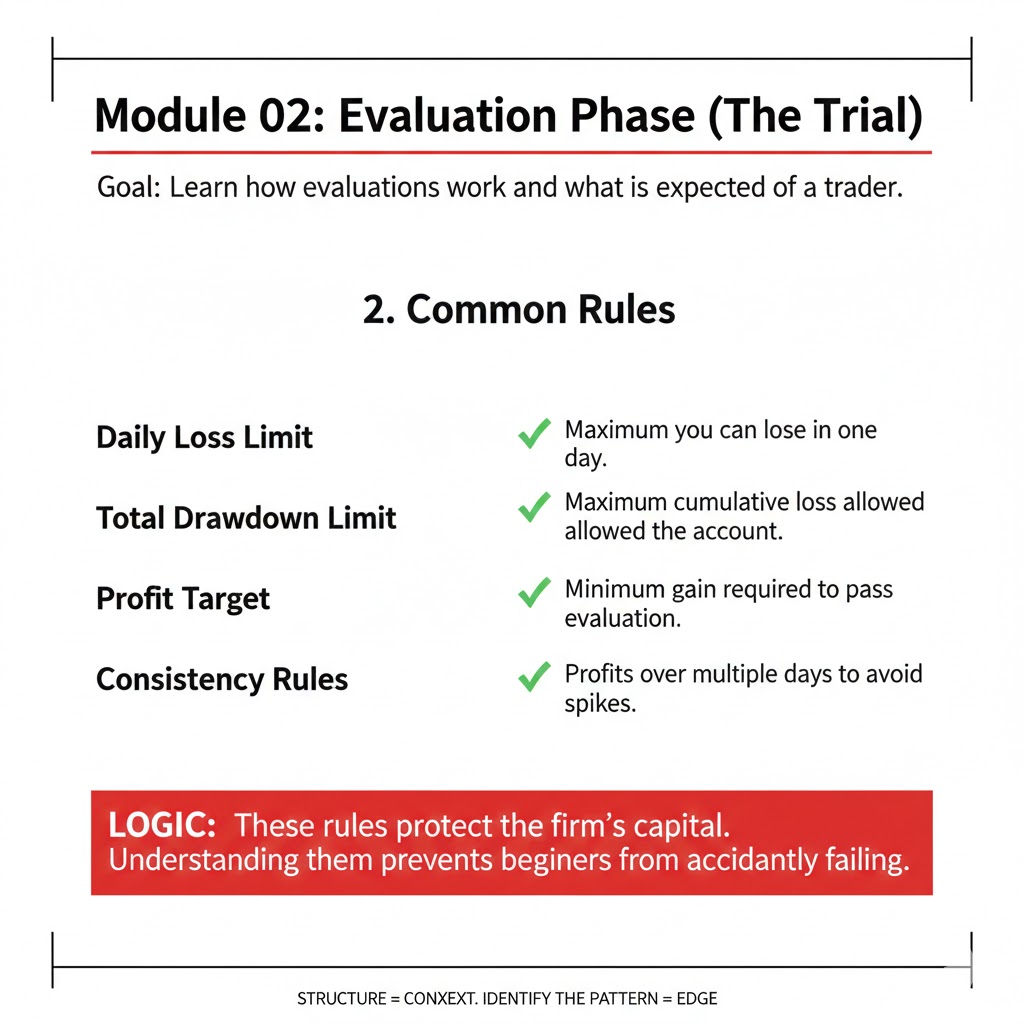
2. Common Rules

Common evaluation rules
  • Daily Loss Limit: Maximum you can lose in one day.
  • Total Drawdown Limit: Maximum cumulative loss allowed in the account.
  • Profit Target: Minimum gain required to pass evaluation.
  • Consistency Rules: Many firms require profits over multiple days to avoid spikes.

Logic: These rules are designed to protect the firm's capital. Understanding them prevents beginners from accidentally failing.

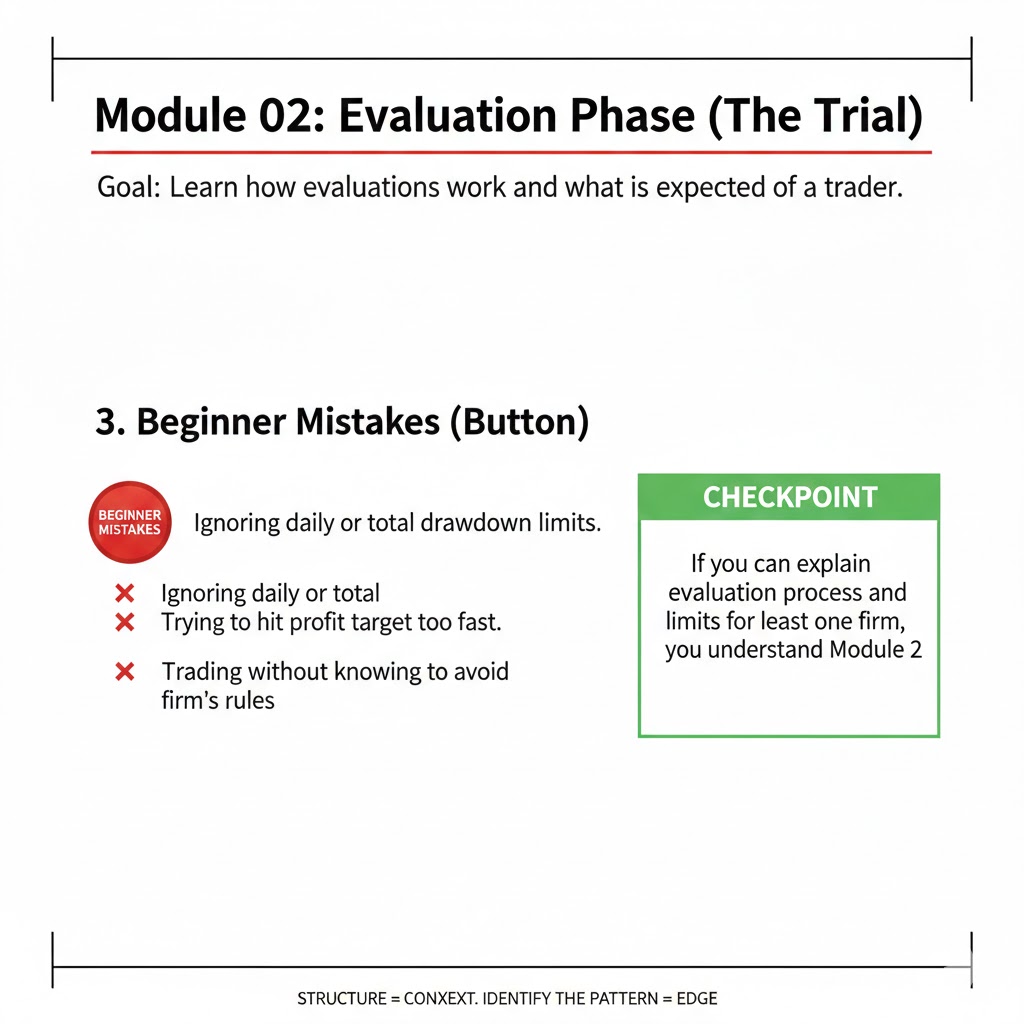
3. Beginner Mistakes

Common beginner mistakes
  • Ignoring daily or total drawdown limits.
  • Trying to hit the profit target too fast.
  • Trading without knowing the firm's rules.

Checkpoint: If you can explain the evaluation process and limits for at least one firm, you understand Module 2.

Module 03

Funded Account Phase (The Real Deal)

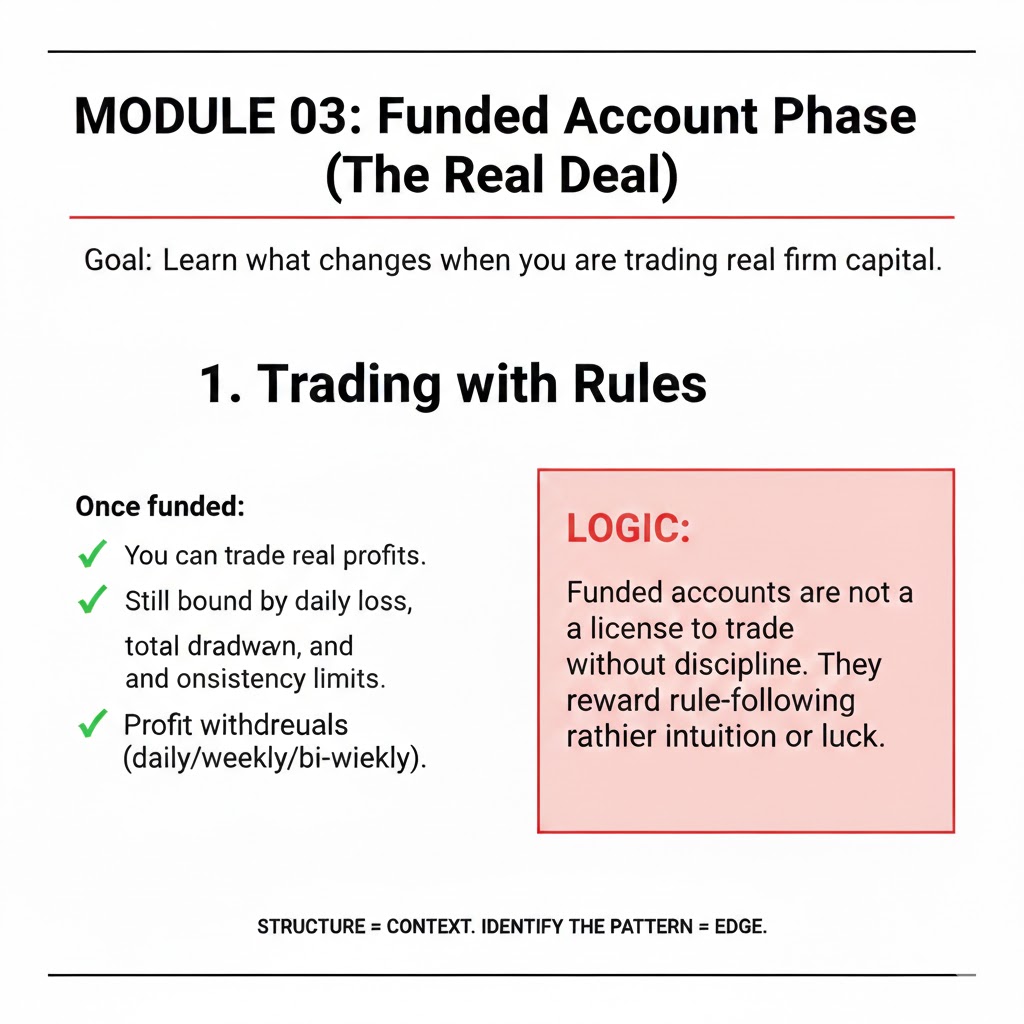
Learn what changes when you are trading real firm capital.

1. Trading with Rules

Once funded:

Funded account trading rules
  • You can trade real profits.
  • You are still bound by daily loss, total drawdown, and consistency limits.
  • Profit withdrawals may be daily, weekly, or bi-weekly depending on the firm.

Logic: Funded accounts are not a license to trade without discipline. They reward rule-following rather than intuition or luck.

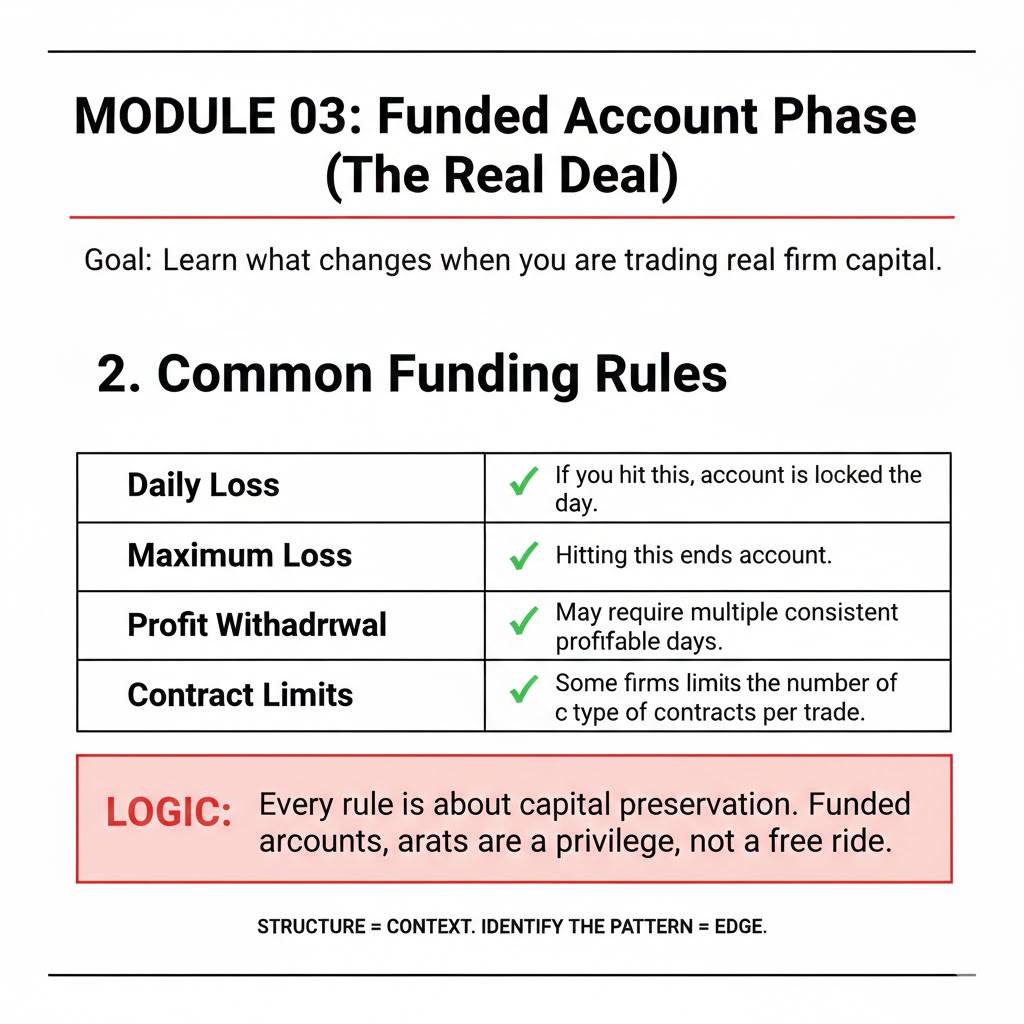
2. Common Funding Rules

Common funding rules table
  • Daily Loss: If you hit this, account is locked for the day.
  • Maximum Loss: Hitting this ends the account.
  • Profit Withdrawal: May require multiple consistent profitable days.
  • Contract Limits: Some firms limit the number or type of contracts per trade.

Logic: Every rule is about capital preservation. Funded accounts are a privilege, not a free ride.

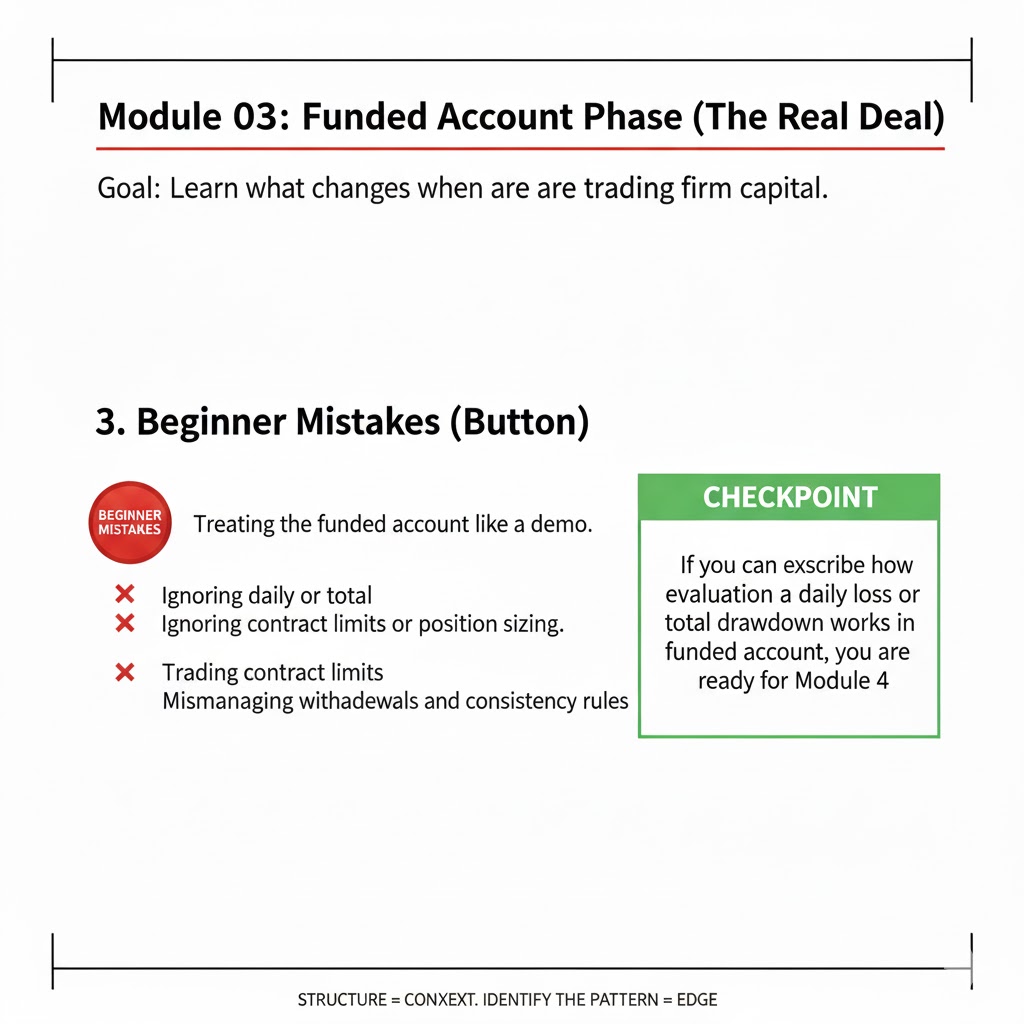
3. Beginner Mistakes

Funded account mistakes to avoid
  • Treating the funded account like a demo.
  • Ignoring contract limits or position sizing.
  • Mismanaging withdrawals and consistency rules.

Checkpoint: If you can describe how a daily loss or total drawdown works in a funded account, you are ready for Module 4.

Module 04

Firm Comparisons (Choosing the Right Program)

Learn how to evaluate and compare firms.

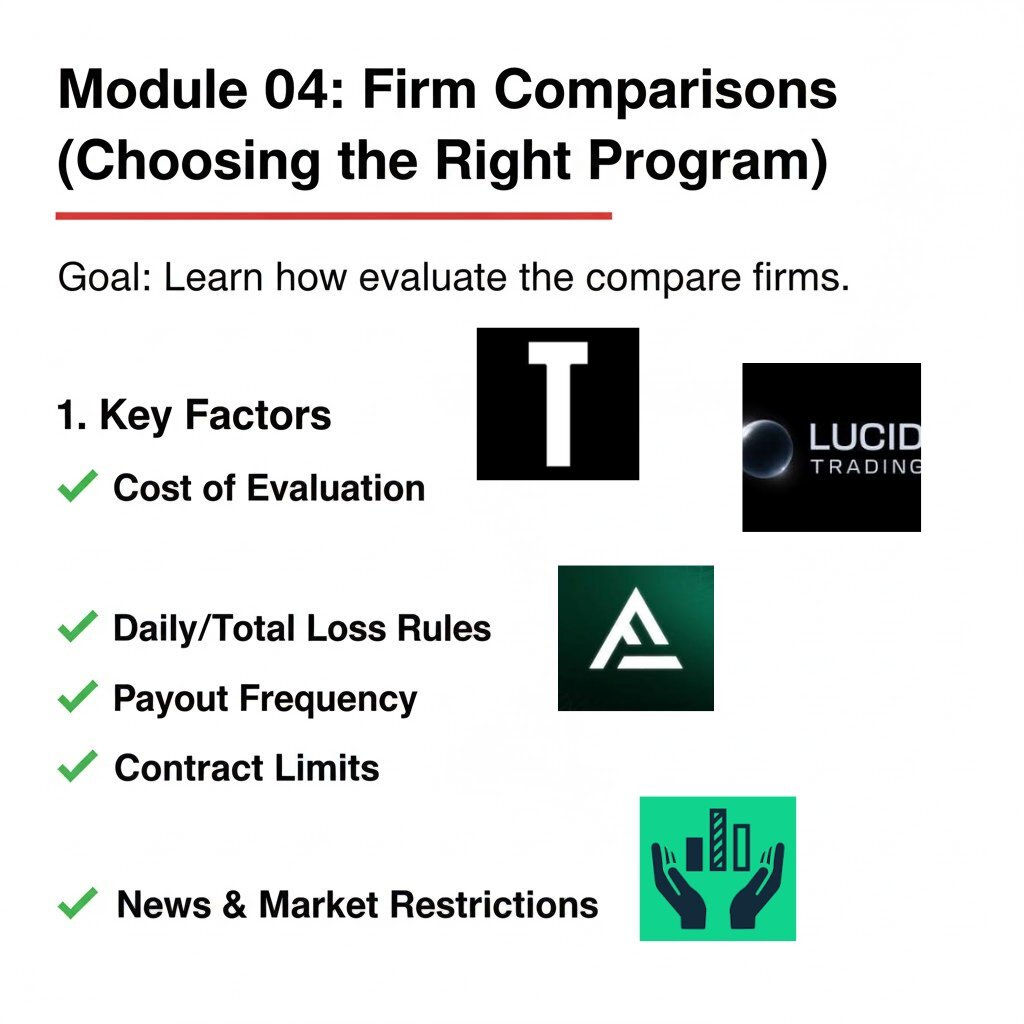
1. Key Factors

When choosing a prop firm, consider:

Key factors in choosing a prop firm
  • Cost of evaluation – Can you afford the fee?
  • Daily/Total Loss Rules – Tighter rules are harder to pass.
  • Payout Frequency – Daily, weekly, or bi-weekly.
  • Contract Limits – Some firms allow more contracts, some restrict minis only.
  • News & Market Restrictions – Some firms forbid trading during major economic releases.

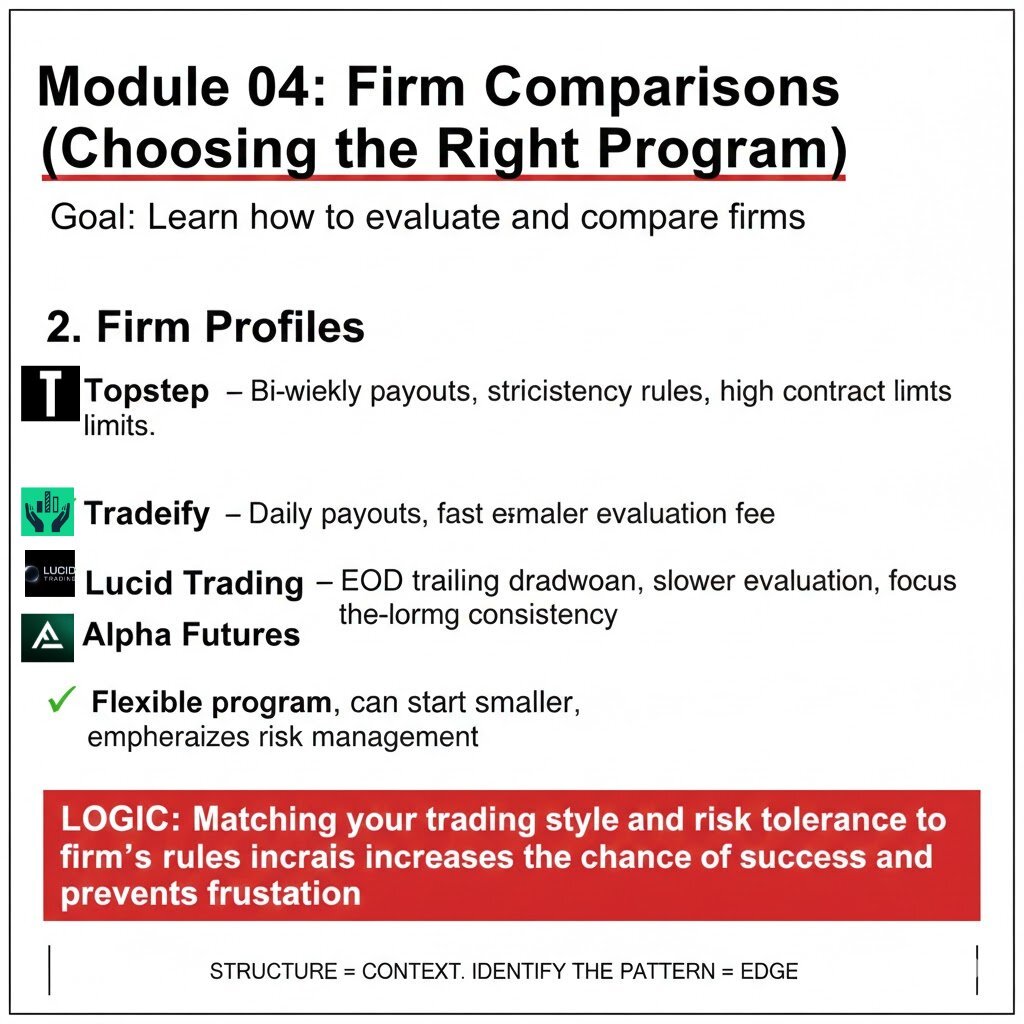
2. Firm Profiles

Detailed firm profiles comparison
  • Topstep: Bi-weekly payouts, strict consistency rules, high contract limits.
  • Tradeify: Daily payouts, fast evaluation, smaller evaluation fee.
  • Lucid Trading: EOD trailing drawdown, slower evaluation, focus on long-term consistency.
  • Alpha Futures: Flexible program, can start smaller, emphasizes risk management.

Logic: Matching your trading style and risk tolerance to the firm's rules increases the chance of success and prevents frustration.

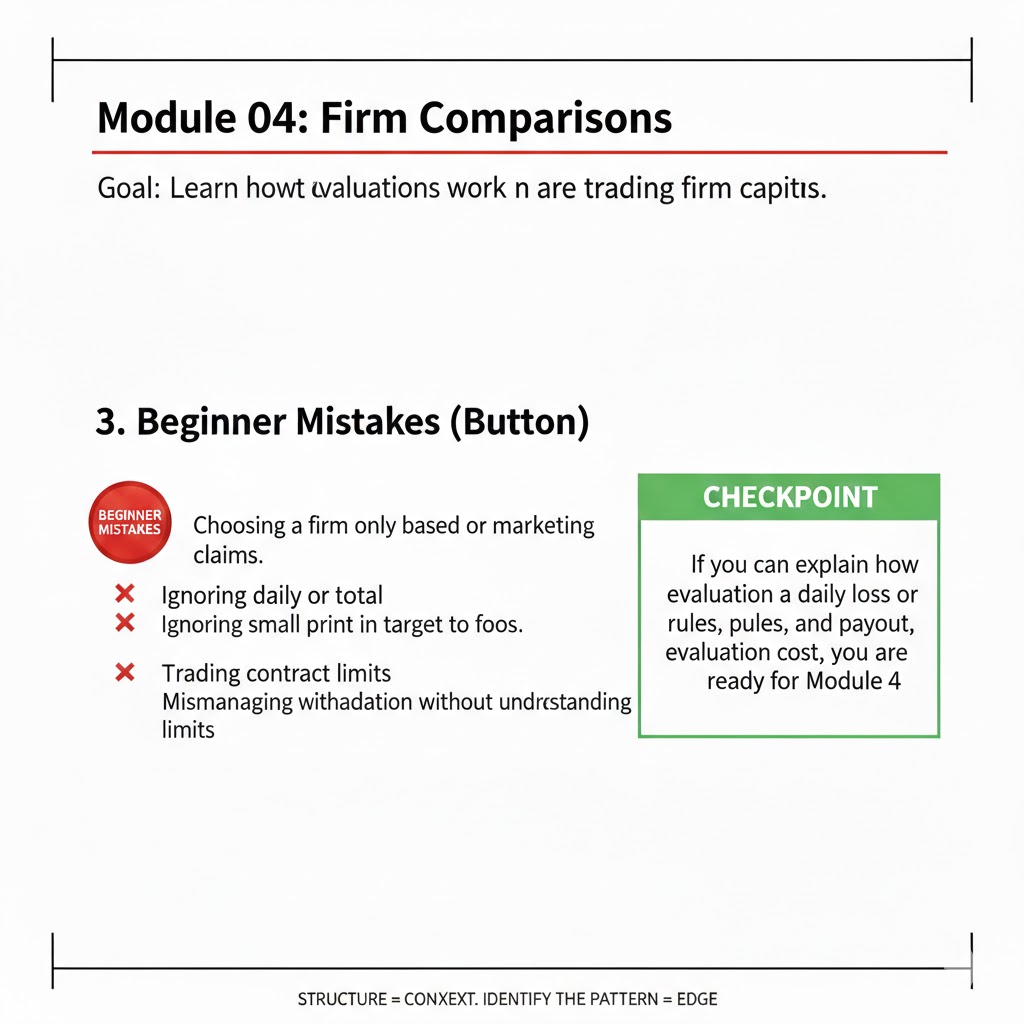
3. Beginner Mistakes

Mistakes when choosing firms
  • Choosing a firm only based on marketing claims.
  • Ignoring small print in the rules.
  • Starting multiple evaluations without understanding limits.

Checkpoint: If you can compare two firms based on rules, payout, and evaluation cost, you understand Module 4.

Module 05

Managing Your Funded Account (Safe Operations)

Learn how to operate within the firm's system effectively.

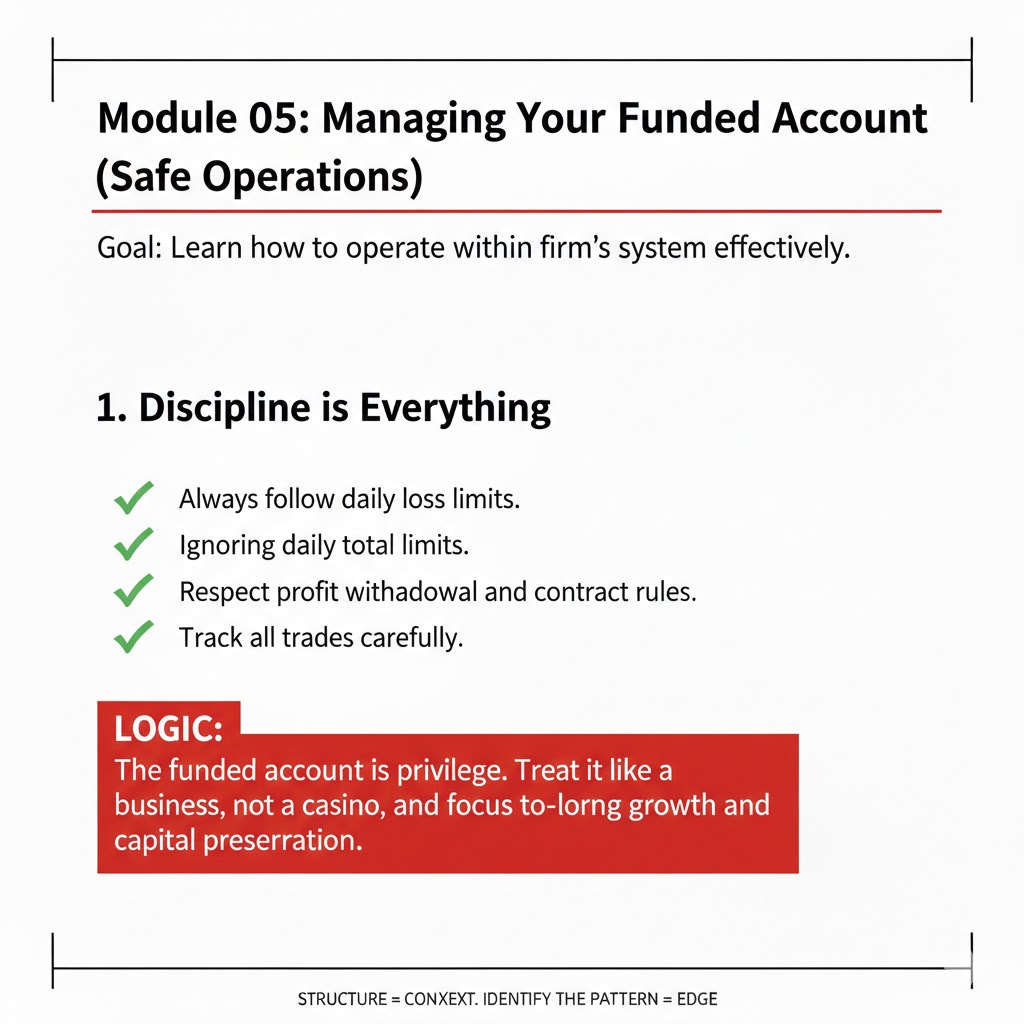
1. Discipline is Everything

Discipline in funded trading
  • Always follow daily loss limits.
  • Respect profit withdrawal and contract rules.
  • Track all trades carefully.

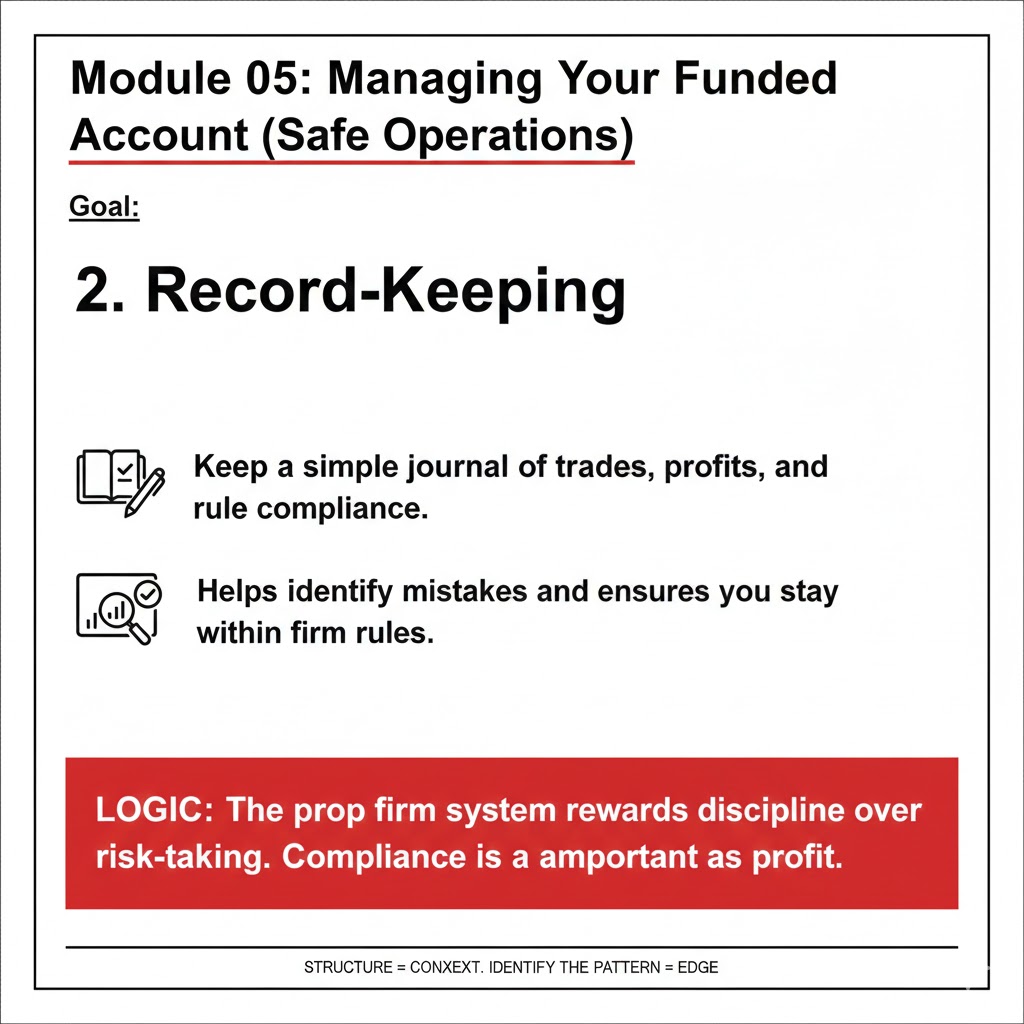
2. Record-Keeping

Trade record-keeping system
  • Keep a simple journal of trades, profits, and rule compliance.
  • Helps identify mistakes and ensures you stay within firm rules.

Logic: The prop firm system rewards discipline over risk-taking. Compliance is as important as profit.

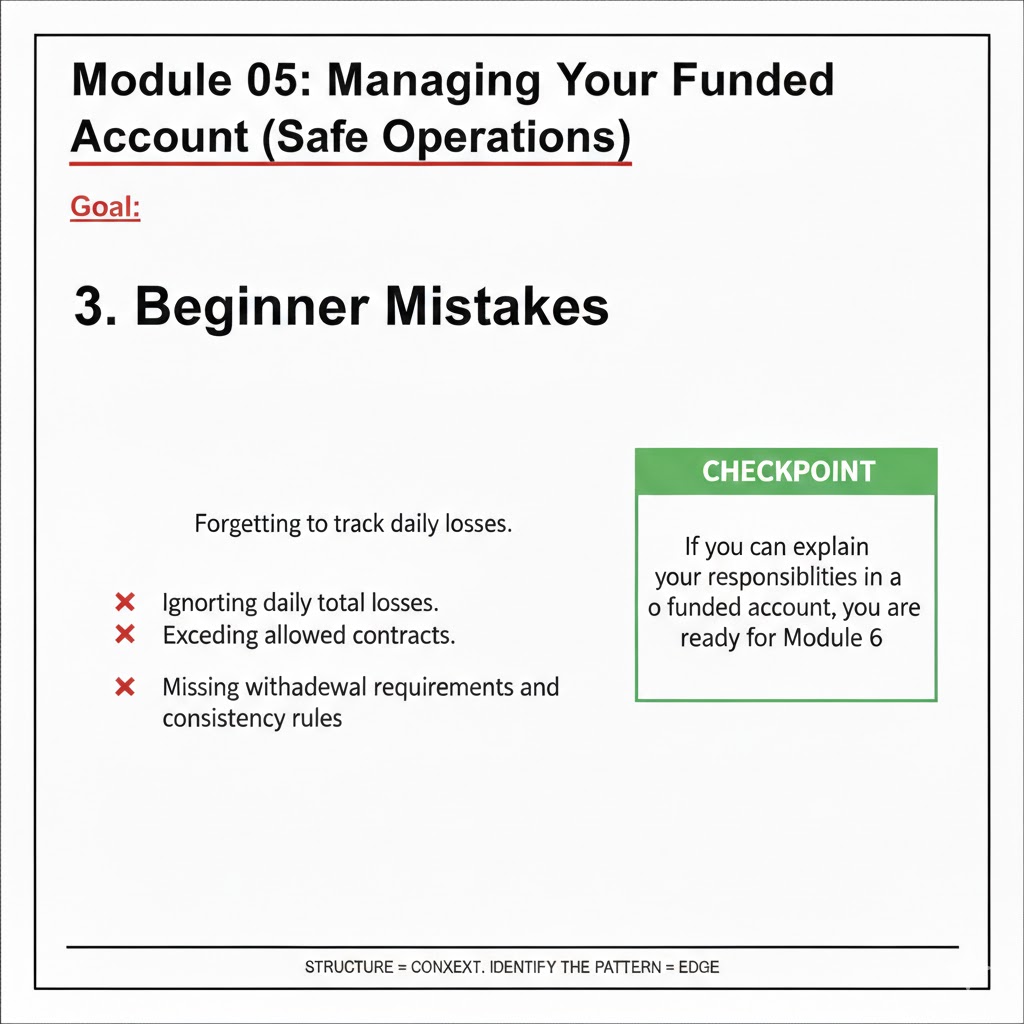
3. Beginner Mistakes

Account management mistakes
  • Forgetting to track daily losses.
  • Exceeding allowed contracts.
  • Missing withdrawal requirements and consistency rules.

Checkpoint: If you can explain your responsibilities in a funded account, you are ready for Module 6.

Module 06

Common Pitfalls and How to Avoid Them

Prevent common failures in prop firm trading.

Common Pitfalls

Common pitfalls overview
  • Misunderstanding evaluation rules.
  • Chasing profits instead of following rules.
  • Ignoring contract size, leverage, and loss limits.
  • Treating funded accounts like personal money.

Logic: Many beginners fail not because they can't trade, but because they ignore structural rules. Avoiding these mistakes improves your chances of long-term success.

Next Steps and Certification

Certification completion

You understand what a prop firm is, evaluation process, rules, and funded account management.

You know the differences between Topstep, Tradeify, Lucid, and Alpha Futures.

You can identify common mistakes and avoid them.

Certificate Earned: Futures Trading: Prop Firm Playbook – Understanding Funded Accounts

Next Step: Once certified, you can safely enter evaluations with knowledge and confidence.